
The World Really is Flat – Crowd Sourced Design Rules

  • January 5th, 2010 | Written By: Jay Baer
  • | View Comments

I’ve finally collected enough of my Twitter 20 interviews (live interviews with social media luminaries, conducted on Twitter) to create an ebook.

I re-read every interview, and picked out the highlights. The best, most intriguing answers. I then categorized the answers topically: brand communities, PR, content creation, social CRM, etc.

The next big challenge was the design of the ebook. I got some excellent advice from my friend Charlene Kingston about ebook best practices (she’s an ebook producer, and Twitter 101 genius). I thought about doing it myself, but decided that given the time I’ve invested in Twitter 20 (and the time devoted by the 20+ interview subjects) that I wanted a highly customized, knockout design.

About us crowdSPRING crowdSPRING 2.0 50 The World Really is Flat   Crowd Sourced Design RulesSo, I turned to Crowd Spring.

Have Photoshop, Will Travel

Crowdspring.com is the online matchmaker for small and medium business, and a global community of 47,000+ independent designers in 150 countries. It’s a head-slapping concept that’s pure genius in its simplicity.

You sign up for an account as a client or as a creative. If you’re a client (like me), you then draft a project description. What you need, why you need it, intended audiences, color schemes, etc. Most of the projects on Crowd Spring are logo designs, Web site templates and the like. But, this crowd-sourced creative community works so well, the boundaries are stretching. Barilla Pasta has a project to design a new pasta shape. (I’m submitting a Fusilli Jerry)

Once you post your project – and how much you’ll pay the winning designer (Crowd Spring keeps a percentage, eBay style) – the designer elves go to work. Soon, you see proposed designs popping up on your project microsite. Your job as a project manager is to rate and comment on each design, to give the submitting designer and the entire pool of participating creatives additional insight into your preferences.
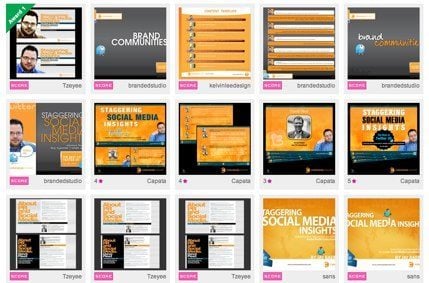
eBook Design for Social Media Superstars a crowdSPRING 2.0 PowerPoint Project 2.0 50 The World Really is Flat   Crowd Sourced Design Rules

You’ve Got Designs

The average project receives 85 submissions. When’s the last time you got 85 choices on anything except breakfast cereal? And remember that these are not quotes or estimates, but actual designs. 85 logos for you to choose from, for example. In my case, I had 53 designs submitted from more than a dozen designers (a bit less than average, due to the unusual nature of my needs).

It was tough to pick a winner, as there were at least 6 designs that I would have gladly accepted. Ultimately, I chose this design from Tzeyee Goh.

social media insights 300x169 The World Really is Flat   Crowd Sourced Design Rules

She’s a very talented designer in Malaysia, and has been a terrific collaborator on this project. Once you select a winning design, Crowd Spring sends both parties a standard fee for services contract that you digitally accept, and once the project is completed and accepted, Crowd Spring pays the designer (they bill your credit card once the design submission process is completed).

Fair Enough?

Many designers loathe Crowd Spring and anything that operates in a similar fashion, because it requires creatives to produce free work to win projects. I understand that perspective, and if someone wanted me to create a customized sample social media strategy to win a job, I’d probably pass.

But, I believe that most of the designers that object to Crowd Spring often work on projects much larger than those typically found on the site, and that if 47,000 designers are eager for work, Crowd Spring is doing more good than harm.

In my case, I loved it, and I recommend giving it a try if you’re in the market for a small design project. Also a good option for agencies wanting to outsource.

What do you think about crowd-sourced design? Good, or evil? (and be on the lookout for the ebook, thanks).

View Comments to “The World Really is Flat – Crowd Sourced Design Rules”

  1. Jay,

    Much thanks for trusting the talented community of designers on crowdSPRING to help with your design and thanks very much for sharing your experience with your readers.

    Best,

    Ross Kimbarovsky
    co-Founder
    http://www.crowdspring.com
    .-= Ross Kimbarovsky´s last blog ..New Features for Buyers and Creatives =-.

  2. This may be stepping a little over the boundary but I’m wondering what you ended up paying for it? Is it like elance cheap where you see bids on $10k jobs for $500 bucks or what realm are you/we in for said service?

  3. Jason says:

    I’m completely bifurcated by this concept. The web strategist in me loves the forehead-slappingly simple concept of crowdspring, as well as its ability to expose clients to a far wider pool of design trends, practices and perspectives than they would normally be able to reel in from Craigslist, elance, etc. Huzzah for cultural cross-pollination.

    But there’s this angry, diva-designer part of me that feels this is the commoditization of creative work, and it teaches clients the mistaken idea that producing creative is not a collaborative effort – they hit submit, then sit back and wait for the work to just materialize.

    We put up what I thought was a great post about spec creative this morning, and why we don’t do it. Having gone through the painful and confusing process of producing it for new biz pitches, I can’t help but agree with its stance.

    Besides, receiving 85 submissions and doing many subsequent rounds to refine it is great and all, but wouldn’t you rather receive 3 concepts that hit exactly what you were looking for first (or second) time?

    • Jay Baer says:

      I hear you, and I loved Jon’s post (read it folks at http://www.dontdrinkthekoolaidblog.com). But, I think the circumstances are different. This wasn’t and isn’t a request for an agency, etc. It was a single, self-contained, relatively simple creative project. I wasn’t looking for a compatibility with a team, or strategic guidance, or anything of that sort. Just a great design, and some production help. The same way there are quick service printers, and highly custom printers, there are a lot of different levels of designers. Clearly, what BaileyGardiner.com does is a far cry from what Crowd Spring participants are about.

      • Jason says:

        It’s a good point – use the tools that are good enough for what you want to achieve.

        Having mulled it over, I’m coming to the conclusion that this is the way things are moving, as painful as it may be to me as a designer, and so we should find ways to harness this shift, rather than resist or resent. Tools like Crowdspring enable the movement away from localized supply and demand to a meritocratic model – you get paid according to the level of your talent, not the supply of your skillset.

        It’s daunting to feel like you’re competing against the rest of the world, but at the same time, this new economic model will likely reward you upping your game like no other.

        As a side note, the outrage expressed by many designers here is of the exact same flavor as that of the IT industry, call centers and auto workers, during the growth of outsourcing. Guess there are still folks out there who thought their jobs were the exception to the rule, huh?
        .-= Jason´s last blog ..The Key to Traditional Advertising in 2010: Personalization =-.

        • Jay Baer says:

          You raise an outstanding point about local markets versus fluid, merit-based commerce. If you’re a young designer, working for yourself, what exactly is your business development model? Crowd Spring and others like it give you a chance to make a living, and while there may be industry consequences, I support putting people to work.

  4. First, can’t wait for the ebook! Second, crowdsourcing is awesome. True, 50 plus designs “lost” in the ebook sweepstakes but there are 6 designers that really impressed you. In the long term, isn’t it better to get discovered than to walk the earth as a shadow, an unrealized talent. Ok, maybe that is a little deep but getting noticed as a designer and having someone publicize the site is a win in the long-term even if you don’t “win” the current project.

    • Jay Baer says:

      That’s the way I see it Lamar, and thanks for the great comment. I see Crowd Spring as making a market, and introducing designers to potential clients in a form and fashion that otherwise wouldn’t be possible. It’s like Pandora, giving you the option to discover bands (many unsigned) that you otherwise wouldn’t know. I understand why designers don’t like spec work – I really do. But, participation in something like Crowd Spring is opt-in, of course. Participating designers choose to participate. Further, most of the designers that object (including some within these comments who are clients of mine – ouch) generate new business via a larger agency or other methodology – not themselves. Thus, if you’re a designer that isn’t employed by a larger company, and you’re trying to make a living, why wouldn’t you participate – unless you have very strong objections?

  5. Everytime I visit your blog here I am presented with top quality information that to be honest just does not come any better, the information you provide is of the upmost quality.

    Mark McCulloch
    .-= Mark McCulloch´s last blog ..Time Management – 4 Key Tips to Time Management That Help You Run Smoothly =-.

  6. Great post and a fascinating concept, Jason. I’m also torn because I don’t think creatives should have to generate ideas for free, but I also think sometimes you need to pitch your work by showing something. It’s a hard balance.

    I was confused by this statement in your post:

    But, I believe that most of the designers that object to Crowd Spring often work on projects much larger than those typically found on the site, and that if 47,000 designers are eager for work, Crowd Spring is doing more harm than good.

    What do you mean by doing more harm than good? Or is that a typo? Seems to me that with 47,000 designers willing to participate it must be valuable to them.

    Thanks again for great content!!

  7. I think this crowd-sourced design concept is excellent for students. It lets them practice on real projects, build content for their portfolio and maybe even get paid in the end.

    Being a designer, I feel this is like buying cheap tennis shoes at the Dollar Store. Yes, they have laces and insoles but they don’t fit like my ASICS.

    On a professional level, I prefer the client/designer relationship.

    • Jay Baer says:

      My experience is that some of the work produced from Crowd Spring is on par with big-time designers. Most of it is a cut below, I’d agree, and if you need something quick and easy, it’s a great outlet. From a relationship perspective, I have one with my winning designer now, obviously didn’t have one with the non-winning designers.

  8. Have used crowd-sourced design and loved it!! supereasy to use, and I am maniacal about having choices–we used 99designs.com and spent $300. Though when I told some designers I know, I was dodging daggers and eggs being thrown at me.

    Never used it for an ebook, but you’ve got me thinking now…Anxious to see yours and how it turned out

  9. Twitter Comment


    RT @jaybaer: The World Really is Flat. Crowd-Sourced Design Rules [link to post]

    Posted using Chat Catcher

  10. Twitter Comment


    RT @jaybaer The World Really is Flat – Crowd Sourced Design Rules [link to post]

    Posted using Chat Catcher

  11. I believe there are 2 key elements missed by most when judging whether crowdsourcing is good or bad …

    A) The crowd SELF SELECTS the work they desire to compete on. Most communities leveraging Csourcing are uber transparent, so anyone doing work prior to being paid knows EXACTLY what they are getting in to … models that can bring hyper-focus to all of this and didactically communicate to the crowd what the desired output the client expects have the greatest success. Why? Because the more specific you can be input wise, the more self selecting the crowd can be. They can view the possible income, requirements of the work and how much time it will most likely take them and make an INDIVIDUAL decision to compete or not to compete … Creatives who do not wish to go down this road do not have to. Plus, it is NOT a flea-market, if you offer up a poor incentive, you will get back poor or very few submissions.

    B) Second point quickly, is exposure, rankings, and potential for follow up work. Programmers who compete in TopCoder contests are competing for companies such as ESPN, Facebook, and Disney. Models that ‘get it’, keep vivid rankings on their talent and top talent does NOT go unnoticed. And often an agency or company will leverage a crowdsourced methodology, be so impressed with an individuals work and then higher that individual down the road or contract them.

    I’m not saying it’s a perfect fit for ALL needs, but the reality is, more and more verticals (advertising, design, fashion, software, ideation, marketing research, and more) are tapping crowds as PART of their innovation strategy. It is happening.

    Jay, great post and as always concise and clean writing, thanks!
    .-= Clinton Bonner´s last undefined ..If you register your site for free at =-.

    • Jay Baer says:

      Great comment Clinton, thanks. I agree that the cow has left the barn. Crowd sourcing economics are powerful enough, that I believe we’ll see a lot more of it in the near future. Those that don’t want to participate don’t have to, as you adroitly point out.

  12. Dear Jay:

    Very interesting article and it was interesting to see some of the results as well as the selected designs.

    Yes, you nailed it on the head, would you do a social media strategy on spec? The advertising and graphic design industries have been guilty of this forever in new business pitches, doing an entire campaign on spec without complete collaboration with client.

    Here’s what AIGA, the professional association for design, has to say about spec:

    • Clients risk compromised quality as little time, energy and thought can go into speculative work, which precludes the most important element of most design projects—the research, thoughtful consideration of alternatives, and development and testing of prototype designs.

    • Designers risk being taken advantage of as some clients may see this as a way to get free work; it also diminishes the true economic value of the contribution designers make toward client’s objectives.

    So what do I think? Your experience changes my mind. Small projects, yes. For overall branding, I think the richest experiences are created as a result of collaboration between creatives and clients.

    I’m looking forward to your e-book.

    Enjoy the winter in beautiful Flagstaff.

    • Jay Baer says:

      Hi Anne. Thanks for the thoughtful response. Yes, my AIGA-member friends are all over me about this, as expected.

      I’m glad my post has made you think about ways in which crowd-sourcing might be appropriate.

      As to the AIGA concerns specifically, yes indeed clients risk compromised quality. I knew that, and as mentioned in another comment, was totally fine with it. I wasn’t looking for a ton of strategy here, just execution.

      As to designers being taken advantage of, I can see the point of it undervaluing the designers contribution. But, just like ebay, the market sets the prices for itself in many ways. If I would have totally cheaped out on this, I wouldn’t have gotten quality design options. And in terms of free work, Crowd Spring has very specific contracts about that. They are very much concerned with protecting their designers from that kind of client.

      For a branding engagement requiring strategy (or a social media strategy for that matter), I don’t think I would go this route. But I was very much pleasantly surprised by the results – and it makes a good platform for discussion. ;)

  13. Twitter Comment


    The World Really is Flat – Crowd Sourced Design Rules [link to post]

    Posted using Chat Catcher

  14. Twitter Comment


    RT @jaybaer: How I got 47,000 Designers Bidding on My Project. Is spec creative good or evil?[link to post]

    Posted using Chat Catcher

  15. Twitter Comment


    Jay, you just waded into a heated debate. RT @jaybaer: Is spec creative good or evil?[link to post]

    Posted using Chat Catcher

  16. I think this is a great concept. Rather than locking in early with one designer (who may not produce what you really were hoping for) it may help you buy a better outcome, while helping designers gain exposure, find new clients, and refine their skills.

    I can appreciate the observations above, but as someone with a small budget who is risk averse when it comes to selecting a designer, this seems like a great option.

    I’m definitely going to check it out for my next project.
    .-= Pamela Rosenthal´s last blog ..Twitter: 5 Reasons to Leave, 5 to Return and 5 Ways to Find Some Balance =-.

  17. Jay,

    Even small projects like a logo design cost a designer about a day’s worth of work that could either be allotted to producing work for paying clients or networking to find new paying clients. If the average project gets 83 responses, an average of 82 people wasted a day concepting and creating a design that may or may not be reviewed by the prospective client.

    An earlier commenter erroneously claimed this this site would be good for students. A decent design program will require a series of portfolio building works through different classes, a senior thesis and an internship. Additional work experience can be gained by offering services pro bono to community organizations.

    Spec work ultimately devalues intellectual property. When repairing a roof, one does not ask a contractor to fix a portion of the roof and if the work is good, the contractor will be payed and have the job. Why should intellectual property be treated any different?

    Brian

    • Jay Baer says:

      Hi Brian. Thanks for the comments. You raise good points. Just to be clear, it’s 83 responses but each designer typically includes several iterations of their work. So in my case it was 50+ designs from ~12 different designers. Also, just for clarity, the designs do need to be reviewed (and scored, and commented on) by the client, as mentioned in the post. Thus, even if the design isn’t selected, all designers receive feedback from the client (and you can open up the microsite so that designs can be commented upon by anyone – like a Flickr gallery).

      • Spec work assumes that commercial artists (designers, etc) need to create as many pieces as possible and if they get paid for it – Bonus! That is not the case. While feedback can be helpful, choosing one piece over another (of equal caliber) can be a matter of taste. In this case the most honest feedback is, “There is nothing wrong with your design but I prefer someone else’s work. Thanks for playing.”

  18. Twitter Comment


    #NOSPEC RT @michaeljbarber: Jay, you just waded into a heated debate. RT @jaybaer: Is spec creative good or evil?[link to post]

    Posted using Chat Catcher

  19. Hi Jay,

    I need to completely disagree with you on this topic.
    What you are promoting is no different than telling everyone they can get sneakers produced by children in third world countries because you can get them for pennies.

    The reason that PROFESSIONAL designers are up in arms over sites like Crowdspring is because what it tells the world is that we work for free. Our education means nothing, our money invested means nothing, our time means nothing.

    Go call 20 dentists, have them all pitch to whiten your teeth, and tell them that the winner may get a long term client. “May” being the correct word. Or 10 mechanics can try and fix your car, and whoever succeeds, “may” get paid.

    In every industry, they will tell you straight out to f–k right off (I believe using profanity is appropriate in this situation).

    Thank you very much for contributing to the demise of what was once a well respected profession.

    LEBOW
    http://ronnielebow.blogspot.com

    • Jay Baer says:

      Hi Ronnie, I appreciate the passion and the comment. I hear where you’re coming from, and I have some reservations about it, as mentioned in the post. However, your juxtaposition is inaccurate. Perhaps you’re right that dentist or mechanics wouldn’t participate in a program like this. But, the fact is that 47,000+ designers are indeed participating. Do you think they feel taken advantage of, or do they look at it as an opportunity to generate new business that they otherwise would have no chance of winning? Clearly, it’s not for everyone, or for every project. Far from it. But, it seems clear to me that the participating designers at Crowd Spring are in favor, otherwise they wouldn’t be involved.

      I believe the profession is still well-respected, and to me it shows a lot of moxie and confidence in your abilities to participate in crowd-sourced projects.

      I understand that the notion of pay for performance is controversial, but I see it taking root. Not just in design, but in a lot of other places. Accident lawyers don’t get paid unless you win your case. Many marketing firms are beginning to work for a share of proceeds rather than retainer. Artists create work and then hope to sell it in a gallery or via Etsy.

      I don’t know that I’m personally ready for the whole world to go this route, but the cow has left the barn. To me, that much is crystal clear.

      And I think you make a valid point about professional vs. other designers (although I’d suggest that many/most of the designers on Crowdspring are professional). There are a wide variety of skill sets in design, as there are in every other industry. Hell, according to Mashable, there are 15,000+ social media consultants on Twitter. Would some of them work on spec? Absolutely. Would the “professional” consultants? Probably not.

      The market sorts itself out. The only danger I see is clients assuming that work from Crowd Spring is fully equivalent to what you’d receive from a 1:1 relationship with a designer or design firm.

      • “The market sorts itself out. The only danger I see is clients assuming that work from Crowd Spring is fully equivalent to what you’d receive from a 1:1 relationship with a designer or design firm.”

        You’re promoting the notion that this is just as good as a 1:1 relationship by engaging in this type of practice. The problem with that idea is that it seems you don’t understand the client/designer relationship. It is the designer’s job to help the client make good choices while participating in the creative give-and-take of the process. It is the client’s job to work hand in hand to nurture their project with the designer, being honest about what they like and honest with themselves about what their target market likes. The client must also participate in the creative give-and-take.

        The crowd sourcing concept simply cuts the client loose from any and all interactions that they don’t to deal with – it pushes them farther away from the professional designer that will make good decisions and stand up for those decisions when the client is making a poor one that may hurt them. Not all clients are going to make bad decisions, but enough of them will make decisions that end up looking dated in 2 years because they chose something trendy over something timeless. How many times have you heard “The customer is always right.”? That’s a falsehood. Having the money doesn’t make the client right. Having the money makes the client’s opinion very important, but it doesn’t make it right. That’s why designers and clients must work together to create outstanding designs. A professional designer can’t help the client understand that from crowd sourcing. You have to hope that the client will pick your well-thought, professional design over the hobbyist that used the Papyrus typeface to make something look old and neato. That’s not design.

        What has happened here devalues the designer down to a dancing monkey. The designer now offers no input into the process, the client simply picks one of 83 different choices and poof, process over. It DOES come down to taste, because the designer is not working hand in hand to ensure the client is looking at the absolute best solutions for their individual needs. They are not able to give the client any input at all, they aren’t able to collaborate with the client at all. How can you say it’s up to the professional designer to educate clients in the difference between their skills and the Photoshop hobbyists if it comes down to client taste and the designer can’t talk to them?

        “(although I’d suggest that many/most of the designers on Crowdspring are professional).”

        I very much disagree with this. Many/most designers on Crowdspring (and other crowd sourcing sites) are not professionals. Some may be, but I believe many of them are hobbyists, students, toolers or desperate freelancers at best. Part of being a professional is being paid for your work. If 1 designer out of the 83 designers gets chosen, then 82 of those folks are not getting paid. That means they’re a desperate freelancer that is wasting their time on projects that don’t pay. The winning designer on your project is a student. Good for her, but you chose a student instead of one of the supposed 40,000 professionals. I’m glad you enjoyed the Powerpoint presentation she made for you, but again it reinforces the idea that the 1:1 relationship is no longer necessary because you found a student to give you what you wanted without having to interact with her on an overly engaging level for a fraction of the cost.

        I’m saddened that you’re so delighted with something that is so destructive to our industry. Because of this, starting designers can’t seem to charge for what their work is truly worth because these sites have devalued it so much. I’m all about the lower half making money and this is hurting them even more than it’s hurting established designers.

        But congratulations on your Powerpoint presentation, it turned out nicely.

  20. The difference is, you don’t hire 50 accident lawyers at once, nor do you hire 50 marketing firms. You hire one.
    What these sites do is de-value us as an entire industry. Many clients now unfortunately believe that the look and branding of their company is worth less than a tire rotation and oil change on their BMWs. And once again, I have to disagree. Anybody with a hacked version of Photoshop can hang a shingle and call themselves a professional. Many true professionals are NOT contributing.
    Who is contributing are hobbyists, students that can’t get jobs in an oversaturated industry, and people in foreign countries where $200 goes a long way. It appears from many of the contributions that only a very small majority actually possess some true talent.
    Here’s the biggest tell; If the designer can’t provide you with a vector file (ie, a logo designed in Adobe Illustrator), they aren’t a professional.

    I have written numerous articles on this subject and recently wrote a blog article that was circulated by professionals worldwide on Twitter (it was number 3 back in September). It is entitled “we have become cheap whores”. I invite you to check it out…
    http://bit.ly/krMrO

    • Jay Baer says:

      I really l like your post. Nicely done. Turns out, we’re only born about two weeks apart as well. Ahh, turning 40. Such a great time.

      I don’t disagree that this scenario creates risk for the industry. I think I’ve been pretty clear on that in the original post, and throughout the comments. But, if there are so many designers participating, I believe these are the core issues:

      1. There are too many designers
      2. Software has made many more people consider themselves “designers” than ever before
      3. “professional” designers are not doing a good enough job differentiating their skills from less-skilled designers

      All of this I believe to be true, and no amount of ranting is going to fix it. If clients don’t perceive a difference between good, reasonably priced design, and basic, less expensive design, that’s not the clients’ fault. That’s the industry’s fault.

      And bemoaning it won’t help. Technology and crowd-sourcing inexorably changes the rules. Do you think newspapers are happy about Craig’s List taking billions away in classified revenue, just because Craig doesn’t care about making money? How about TV and DVRs? Record industry? Travel agents?

      All of these are groups of professionals that were disintermediated by technology, and whether those advances were “fair” is immaterial. The Web creates frictionless economies eventually. Always.

      So I agree that this is a problem for designers. And as someone who has owned agencies where our revenue was based on clients’ understanding the difference between great and schlock, I sympathize. But, if I were a designer, I’d spend my energy differentiating and adding value, rather than condemning a business model that will not go away, and that many are gladly embracing.

    • Mj says:

      Ronnie, I couldn’t have said it better myself. I struggle all the time trying to understand why this practice is tolerated in our industry. These people that promote crowd-sourcing wouldn’t consider doing spec work for one second in their own professional careers, but except it as a matter of course when it comes to ours.

  21. Twitter Comment


    Having a debate with an author (in the comments section of his article) promoting a crowdSourcing logo design site. [link to post]

    Posted using Chat Catcher

  22. Twitter Comment


    The World Really is Flat – Crowd Sourced Design Rules | Convince & Convert [link to post]

    Posted using Chat Catcher

  23. I haven’t used Crowdspring, but I have run a series of competitions on 99Designs and have been impressed with the deliverables and costs for a Brochure Template, a Logo and a Landing Page.

    Each 99Designs project resulted in hundreds of submissions and multiple design iterations – some lousy, some very good. With that said, I have used high-end design agencies that have produced fantastic results with less of the “Creative Director” burden on my shoulders….though at 30x the cost.

    Both crowd sourced design and “traditional” design models have their place in a marketing program. Crowd Sourced design is great for small projects like yours. If a company is looking for a complete brand identity, collateral package, website, print ad campaign and application UI (e.g. an impressive one like Hootsuite’s) a top notch internal or agency design team is a must.

  24. Twitter Comment


    The World Really is Flat – Crowd Sourced Design Rules – [link to post]

    Posted using Chat Catcher

  25. Twitter Comment


    The World Really is Flat – Crowd Sourced Design Rules – by @jaybaer (about crowdSPRING) – [link to post]

    Posted using Chat Catcher

  26. I agree that this type of client-service is an enormous risk to creative industries. It devalues what we, as creative professionals, do for a living, and undercuts the value that we provide to our clients.

    Imagine having 50 accountants from all over the world prepare your taxes and then picking the one that gets you the best return — would you feel comfortable with that set-up? Because you have absolutely no relationship with any of the accountants, how in the world are you to know if you can trust the quality of all the work they did while you weren’t involved or looking?

    (As if accountants would ever submit to working like that. They’d do what ALL creative professionals, students, and wannabes do: they say “Hire me for a reasonable fee and I’ll work for you. If you don’t want to hire me, then buzz off. I don’t work for free.”)

  27. Twitter Comment


    #NoSpec RT @ronnielebow: Having a debate with an author (in comments ) promoting a crowdSourcing logo design site. [link to post]

    Posted using Chat Catcher

  28. Twitter Comment


    RT @ronnielebow: Having debate with author (in comments section of article) promoting a crowdSourcing logo design site. [link to post]

    Posted using Chat Catcher

  29. Twitter Comment


    An excellent debate is happening about spec creative right now. Those against: http://bit.ly/5nsCrz, and those for: [link to post]

    Posted using Chat Catcher

  30. Twitter Comment


    RT @leightonhubbell RT @ronnielebow: Having debate with author (in comments ) promoting crowdSourcing logo design site [link to post]

    Posted using Chat Catcher

  31. Twitter Comment


    RT @ronnielebow Having debate w/ author (in comments section of his article) promoting crowdSourcing logo design site. [link to post]

    Posted using Chat Catcher

  32. Twitter Comment


    RT @LogoMotives: RT @ronnielebow Having debate w/ author promoting crowdSourcing logo design site. [link to post] #NOSPEC

    Posted using Chat Catcher

  33. Twitter Comment


    Crowdsourcing sux. RT @LogoMotives @ronnielebow Debating author (in article comments section) promoting crowdSourcing. [link to post]

    Posted using Chat Catcher

  34. The irony of your post is that you claim it’s great for designers to work under this model, but state that you wouldn’t. What makes you any different than them?

    • Jay Baer says:

      Perhaps we have different understandings of “ironic”? I said I probably wouldn’t do it (although I’ve never been asked). That doesn’t mean it’s an invalid business model for others. I’ve been a global Internet marketing consultant for 16 years. Most of the designers on Crowd Spring I’d wager don’t have that level of expertise. Thus, to get the ball rolling, they choose to take a flyer on projects via that forum. I don’t see the similarity at all.

      • Really? You don’t see the similarity between you asking 80 or so people to design something for you on the chance that you *might* pick their work and pay them for their time and someone asking you and 80 or so other social media people to conduct a campaign on the chance that they *might* pick your work and pay you for your time?

        Also, you should drop the idea that since 47,000 people are willing to do it, it must be good for them. By that logic, it must be OK with you when someone uses sweat shops to produce their products at a lower cost, after all, there are people willing to do it, so it must be good for them, right?

        You said that no one ever asked you to work on spec, so I’ll call you to the table. If you think it’s a great concept, go ahead and put together a social media campaign for me and if I like it, I’ll pay you.

        By the way, many people may not even see your post for what it really is – a cheap piece of link-bait. Kudos on that – it has clearly worked.

        Now let’s see if you have the stones to take me up on my offer ;)
        .-= Jeremy L. Knauff´s last blog ..Thought Leader Thursday – Jason Sadler =-.

  35. Thanks for mentioning my contribution in this post. With all of the heated debate, I’m sure I’ll be getting traffic off this one for a while.

    I have always believed in the value of experimentation and have never backed away from trying new ideas and strategies. As a small business person, I’ve tried to offer my services through sites like CrowdSpring, and was never happy in that forum. Kudos to people who are happy there and are willing to pitch for projects. It’s a big world and there is room for everyone to do business in the way he/she feels comfortable. I’m grateful that it’s not a one-size-fits-all world.

    I do like the cover you selected and am eager to see the first of the Twitter 20 ebooks published. The fabulous content will remain long after the cover controversy fades away.

    • Jay Baer says:

      Hi Charlene. Thanks very much for the comment, and for helping me with the ebook planning. Of all the comments here, I like yours the best. “It’s a big world and there is room for everyone to do business the way he/she feels comfortable.” Exactly. Thanks for seeing the big picture. And I’m not worried about a little controversy. I get paid to help people think through social media and crowd sourcing pros/cons, which is definitely a reason I went this route.

  36. Twitter Comment


    RT @elizabethsosnow: The World Really is Flat – Crowd Sourced Design Rules via @jaybaer [link to post]

    Posted using Chat Catcher

  37. Twitter Comment


    The World Really is Flat – Crowd Sourced Design Rules via @jaybaer [link to post]

    Posted using Chat Catcher

  38. Jay Baer says:

    When Designers Attack. My Personal Case Study of Crowd-Sourced Design. http://om.ly/dorQ

  39. If the quality of your tax return from a crowd-sourced accountant is similar to the quality of the “best” design you chose for your book cover, then I wish you luck when the IRS comes knocking on your door.

    The proof is in the pudding, as they say, and the fact that the design work you eventually received on this project is mediocre at best proves my point that you get what you pay for. If you want serious, quality work, you’re going to have to hire someone of quality, seriously.

    • Jay Baer says:

      Of course you get what you pay for. That’s true in every single professional services industry. So why do you guys have such a problem with the lower end making a living? Seems like you don’t want to allow people a choice between inexpensive design, and the serious, quality work you speak about.

  40. Twitter Comment


    Why do self proclaimed social media / marketing experts always fawn over industry degrading business models? [link to post]

    Posted using Chat Catcher

  41. Twitter Comment


    AAAR! @Vonster Why do self proclaimed social media/mkting experts always fawn over industry degrading business models? [link to post]

    Posted using Chat Catcher

  42. Catherine says:

    What do I think? I think I’d like to hear what you think about sites like CrowdSprind and 99Designs after you to read the information collected by SpecWatch.

    99designs by the numbers: http://tinyurl.com/m29kdj
    Crowdspring by the numbers: http://tinyurl.com/m3bj5p
    .-= Catherine´s last blog ..iStock + Logos = ? =-.

  43. An excellent debate is happening about spec creative right now. Those against: http://bit.ly/5nsCrz, and those for: http://bit.ly/5Z13g8

  44. Twitter Comment


    RT @Vonster: Why do self proclaimed social media/marketing experts always fawn over industry degrading business models? [link to post]

    Posted using Chat Catcher

  45. Twitter Comment


    The World Really is Flat – Crowd Sourced Design Rules [link to post]

    Posted using Chat Catcher

  46. David Svet says:

    This is an interesting debate. Crowd sourcing design work is forcing the middle market to the bottom. Remarkably great designers still have a market. Average designers will soon be forced to compete in crowd sourced markets for bottom dollar. Book covers have been close to this model for a long time. It’s simply spreading as the tools and communication technology make the world smaller, or as you say, flatter. I’m a designer and I’m not happy about it. But I’m also a realist and accept that I have to convincingly demonstrate my differential advantage on a daily basis. On a personal level, I’m glad you had a good experience. On a professional level, the whole thing makes me sad.

    Love the blog! Keep up the great work!

  47. I can certainly understand why you would find so-called ‘crowdsourcing’ appealing from a ‘more for less’ point of view. But as a designer, I take issue with several of your points and hope you’ll permit me a few lines to discuss.

    In your post you state that you “understand that perspective, and if someone wanted me to create a customized sample social media strategy to win a job, I’d probably pass”.

    Someone commenting called that statement “ironic” (I think they meant to say hypocritical) and your response was “I’ve been a global Internet marketing consultant for 16 years. Most of the designers on Crowd Spring I’d wager don’t have that level of expertise”.

    Fair enough. That’s a reasonable position. But outfits like Crowdpsring and 99designs will tell us that experience (and qualifications) are no longer part of the equation. One of Crowdspring’s marketing lines is “beware the underdog” (cynically, and when it suits them, Crowdspring and 99designs also market their ‘creatives’ as being experienced professionals with reams of experience but that’s another discussion entirely).

    You seem to believe that your 16 years of experience counts for something (which I agree) yet the business model you’re endorsing claims it doesn’t. On the other hand, most designers didn’t stand up for photographers as stock photos decimated that industry, so unlike some others here I wouldn’t expect you, or anyone else other than designers, to care about the effect of crowdsourcing and contests on our industry.

    In terms of 47,000 designers working ‘on’ Crowdspring, that number (referenced several times) is to be charitable, disingenuous. According to Crowdspring’s own website (browse through their ‘creatives’ directory), over 33,000 ‘designers’ have signed up and haven’t submitted a single design to any contest. A good chunk of their designers sign up, enter 1, 2, 3 or 4 contests before bailing.

    Now, ask yourself this – if ‘crowdsourcing’ is such a big ‘hit’ with designers, why do over 60% sign up, then never participate? And why do most bail after entering several contests? Their competitors, 99designs will admit that close to 2/3 of their ‘community’ listed on their home page aren’t participating designers or clients, but non-categorized ‘registered users’.

    Perhaps more importantly, why do sites like Crowdspring and 99designs (whose community is 150,000 ‘strong’) make such a big deal about these numbers? I’ll tell you why. The turnover and burn rates on these sites is ferocious and new blood has to be ‘recruited’ every day so that contest holders like yourself can have 83 submissions for your project.

    In terms of this being a great model for designers in terms of business, and even though Crowdspring’s up-front payment by escrow should preclude it from happening, don’t you find it odd that many contests go past due, often for months at a time? Let’s take a look at what Crowdspring ‘creatives’ themselves have to say currently on the Crowdspring forums; http://tinyurl.com/ydsplw2 and http://tinyurl.com/ydgewrj

    Seems even designers who “feel comfortable” with, and “gladly embracing” spec work have issues with how it plays out. For them.

    In keeping the ‘World Really Is Flat’ theme, while you’re over at the Crowdspring forums, you can read about how a 14 year-old from Indonesia is participating in Crowdspring ‘projects’, using his mother’s ID. He’s entered 104 contests and won 6. http://tinyurl.com/yby8lmq

    Yep, the world really IS flat. Anyone can access free labor from 14 year-old teenagers in Indonesia, right from their desktop.
    .-= Steve Douglas´s last blog ..A somber, sober and partially impartial look at design ‘crowdsourcing’. =-.

    • I fully endorse Steve’s sentiments. Spec work in graphic design is nothing new, but the rise of online spec websites has brought many bad apple “creatives” to the surface.

      There has always been a range of designers available for any budget, from expensive to relatively inexpensive. It doesn’t take a “design contest” website to find what you consider is “good” value, but rather, just a little research into who you want to work with.

    • Excellent points, Steve! “All that glitters is not gold.”

  48. Twitter Comment


    Designers are up in arms about crowdsourced design markets [link to post]? A sure sign that there are too many poor designers

    Posted using Chat Catcher

  49. Twitter Comment


    RT @tweetmeme The World Really is Flat – Crowd Sourced Design Rules/ Great example of crowd sourcing in real life [link to post]

    Posted using Chat Catcher

  50. I am certainly happy that folks are finding satisfaction with $300 logos; obviously, if I found a landscaper to redo my front yard for $1000 I’d be over the moon. But, I don’t know a thing about landscape design. Yes, I know what I like but, really, my home’s value is too important to cheap out on in certain areas.

    Well, anyone can do a “logo” just like anyone can plant a lawn. And if your business is not important enough to go to a designer who’s actually invested in an education, has the right tools, is on top of trends and cliches early, has true talent, understands the complexity involved in designing a logo as the basis of an overall brand identity, knows how to “test” the art in various platforms/sizes/media, gives you all the right variations for various mediums, and can advise you on usage and rights — even create a usage guidelines manual…where was I? Oh, making the point that whether you or many of your readers here understand it or not, a successful identity program is unlikely to come from a hit and run type effort such as crowdsourcing.

    I understand “the world is flat”, I understand the valid applications and interesting ways to use crowdsourcing, and I understand why WalMart is successful. Yes, digital technology has democratized (good) and commoditized (bad) many things. I also love the idea of CrowdSpring offering opportunities for young people to break into the business. But if you look at our “graphics landscape” you have to admit, what a crappy landscape it is because of our propensity to cheap out when it comes to aesthetics in business. Looking good may be good enough for CrowdSpring’s customers and if that’s their bar, fine. But know that any of their competitors who decide to get professional identity development will have a long term competitive advantage because they’ll have a far better, more unique, more enduring product. So that low price tag might actually cost a business thousands down the road.

    • Couldn’t have put it better, Mark.
      .-= David Airey´s last blog ..10 most notable logos of 2009 =-.

    • Jay Baer says:

      I agree. Which is why I used Crowd Spring for an ebook that I am giving away. I think what’s being lost in this imbroglio is that I used Crowd Spring instead of doing it myself, not instead of using a professional designer. Thus, a designer got paid in a situation where otherwise no designers would have been paid. Of course I understand the difference between consultative, professional design, and crowd sourced stuff like this. It’s entirely possible – perhaps likely – that I’ve sold more professional design than any commenter on this post, as my previous company built millions of dollars worth of high-end Web sites. Of course, for items that are important and have permanence I would (and do) use professional designers. The C&C logo and look was developed by bohnsackdesign.com The current blog design was handled by uniqueblogdesigns.com. I think I’ve been pretty clear in the original post and the comments that Crowd Spring is not for every project or circumstance. To suggest otherwise is insane. But, for something simple it works, and it’s a model that’s not going away. That’s why I insist that the core issue is the design community making it clear that there are differences, so people like me don’t start using crowd-sourcing for important stuff as well as less important design needs.

Leave a Reply

You can use these tags: <a href="" title=""> <abbr title=""> <acronym title=""> <b> <blockquote cite=""> <cite> <code> <del datetime=""> <em> <i> <q cite=""> <strike> <strong>

blog comments powered by Disqus