Back Up the Bus – The Changing PR Timeline

Before I got involved in online marketing in 1994, I helped manage political campaigns. In those days, the formula was pretty consistent. You targeted different voter groups with direct mail, radio and TV. Then, with about two weeks left in the campaign, you brought out the big guns and dropped a big TV and direct mail bomb on your opponent.

A few years ago, Arizona (and many other states) began to allow vote by mail. In Arizona, you can now cast your ballot in any state-wide election as much as 8 weeks before election day. Thus, almost every day is election day, and as many as 50% of votes are now cast early.

This of course has fundamentally changed the nature of campaigning in the state. Messaging must be earlier and more consistent, and you can’t keep your powder dry for the end. You have to run hard from day one.

Social media has changed the game for public relations in exactly the same way.
pr relationships

Bloggers and Reporters Aren’t the Same

The decline of media has been well-chronicled. That cow isn’t going back in the barn. Traditional journalists are being “replaced” as information disseminators by bloggers, who have different expectations and norms.

Incidentally, I distinguish reporters from bloggers in two ways. First, reporters have editors, bloggers don’t. Second, the readership for reporters is driven primarily by the reputation of the media outlet for which they write. Bloggers’ readership and reputation is self-made.

Another oft-true delineation is that reporters have journalism degrees and have been trained in the PR firm >< journalist tango. Many bloggers have not.

Because of these important differences, PR firms have to work with bloggers in a much different way than they work with reporters. Most notably, bloggers do not like press releases, and do not like to be pitched. Dave Fleet has exceptional content on his site about this.

Relationships Trump Releases

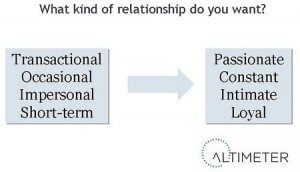
The key to successful blogger relations is just that – having a relationship. Sure, traditional public relations practitioners benefitted from relationships with reporters, but it wasn’t required. A great press release, a killer story angle, and an amazing pitch could still get placement even if you’d never met the reporter. Much tougher to do that with bloggers.

The best practice is to identify the bloggers you want to work with at least three months before you need them, and begin developing relationships with them. Read their blog. Comment on the blog. Interact on Twitter. Connect on Linkedin. Not in a disingenuous, machiavellian way, but in a genuine, meaningful way.

This of course requires a complete rework of the traditional relationship between the client and PR firm, wherein the firm gets told about the new product two weeks in advance and is expected to get coverage. In a blog-dominated world, that will not work. You have to build relationships before you need them, not when you need them.

(relationships model from Charlene Li’s Tapping the Power of the Groundswell presentation)
Did you enjoy this blog post? Let me hear about it:
Leave Comment Below | Subscribe To This Blog | Sign Up For Our Newsletter
  • Actually knowing a blogger before you pitch them (and being a blogger yourself) really helps with the whole process. You also have be brief, concise and on target. People don't really care if you have a well crafted press release, people care if you can provide meaningful information that they can then put into their own words.

    Good stuff Jay.
    .-= Stuart Foster´s last blog ..Spin is Dead =-.
  • Stuart - Your point on being concise really is key. With email, Twitter, Facebook, Linkedin, blog comments, DM, text messages, and the occasional phone call, most bloggers aren't looking to read long pitches in whatever form they may take. It's a 140-character world, whether we like it or not. If you can't explain your pitch in a Tweet, you have a bigger problem.
  • Definitely...have to be lightning fast and to the point. TMZ style...but with lots more accuracy.
    .-= Stuart Foster´s last blog ..Spin is Dead =-.
  • Great advice on relationship timelines, Jay. I feel like it's critical to build trust before you want to use bloggers as a vehicle for information. You've got to listen up before you force content on someone, or you'll turn them off.

    At work, I use our software to identify who our key influencers are (I'm lucky in that respect) and I remain in contact with all of them consistently. Then when we post good content, they are more than willing to share - most of the time without me asking.

    When I blog for personal reasons the roles are reversed, but I still feel the same way.

    Whitney Mathews
    Social Media Manager, Spiral16
    @whitneymathews
    @spiral16
    .-= whitney´s last blog ..Video Interview: Laura Watkins, Green City Market (Pt. 2) =-.
  • Whitney -

    Indeed, using Spiral 16 is an excellent approach for that initial influencer ID task. Then it's a matter of introducing yourself, promoting the bloggers' work, etc. When you need them, they'll be there. Just like when you need me to write about the new version of Spiral 16, I'll remember this comment. Bloggers are like elephants. They remember everything because they have so little else in their lives! ;)
  • I couldn't agree more about the time lines. I'd say 3 months would be the minimum. For those overseeing integrated marketing campaigns that involve magazine ads, if you haven't started researching and interacting with bloggers and influencers in your target niche by the time you are doing your ad buy, you are likely too late to be effective.
    .-= Adele McAlear´s last blog ..Technically Women Launches =-.
  • Thanks very much for the comment. I love your blog. Fantastic design, and the ladies you've recruited for your new posse are top-notch! I agree that 3 months is probably the minimum, but I didn't want to freak people out TOO much!
  • Jay,

    I couple months ago, I would have agreed with you wholeheartedly. Now I still agree with you that this is how things SHOULD be done, but I also think that it's a bit idealistic and unrealistic.

    I've recently started as a community manager for a startup website and my main responsibility is user acquisition...our target audience is bloggers and blog readers.

    I'd love to read their blogs and engage with them for 3 months before I reach out to them to join the site, but it's just not reasonable when I have to reach x amount of users in y amount of time. Maybe this situation is specific to startups in need of funding. Maybe it's a lack of patience thing. I agree with you that this is the right way and you'll find success 99% percent of the time if you do this. I'm just not sure companies can wait that long.

    The other issue is the genuine participation. If you're participating with the long term goal of pitching them, is that really genuine? Is it possible to be genuine unless you actually have an interest in the topic? ie. part of our community is mom bloggers. I cannot relate to the things that moms blog about and so if I were to participate in their community, that would not be genuine. I'd be participating for the sake of participating for the sake of the pitch. Wouldn't a well targeted pitch that genuinely and transparently explains the value of our service to them be more effective?

    Great post, you gave me a lot to think about...as always.

    David
    .-= David Spinks´s last undefined ..(Enjoy 10 returned posts for 2 weeks) =-.
  • David, I completely hear you on the time crunch. In a start-up scenario, I agree that it's tough because you have to detonate the grenade all at once. However, Scribnia (www.scribnia.com) has the advantage of being a site that bloggers themselves can benefit from, so that may make the "cold" pitch a little easier. I signed up for Scribnia myself recently, after being referred to it by another blogger (IIRC).

    In terms of genuine participation, your point is exceptionally interesting to me, and may produce a new blog post. I wonder (in an ideal world) if those pitching in a category shouldn't be part of that category? That's been a desired circumstance in PR for a long time, and I suspect that your mommy blogger outreach efforts would be better if you were in fact part of that world.

    In terms of idealistic and unrealistic, I'd judge myself partially guilty. On one hand, I like to write about the ways things could and should be, because I feel like that's my role and my duty. At the same time, I've owned agencies for 15+ years, so I know all too well that much of what I recommend and train isn't 100% doable always. Hell, I don't follow my own advice some of the time (see my post a couple days ago about WFACT). The way I see it, if people can implement 80% of what I advocate for, I'll be happy and they'll be successful.
  • You bring up some great points here. The methods of information gathering and information display have changed greatly. What are some of the ways that bloggers can get in the mind of consumers who don't frequent blogs or aren't up to date with the wealth of technology that is available now?
    .-= Promotional Products ´s last blog ..Recent Iowa Law Exempts Promotional Products From Ban =-.
  • Juliette
    When you said that bloggers are mostly not"trained in the PR firm", that could be a bad or a good thing. The bad thing about it is that bloggers didn't acquire some common writing skills like trained writers, which they can lack in order to be recognized as quality writers among readers. But the good thing about it is that bloggers are not limited to what they are supposed to be taught and they write outside of the box, which gives them freedom to express themselves completely.
blog comments powered by Disqus