Posts Tagged ‘cost per click’

Why PPC is about to skyrocket - and then CRASH

Tuesday, October 14th, 2008

Times are tough.

But one area that is ready to soar is pay-per-click search marketing (PPC). That most measurable and controllable of digital marketing opportunities, PPC looks like a no-brainer in this economy.

Have you called a newspaper lately and asked them if they’ll charge you per phone call generated? Even with ad sales down 14% year over year, they won’t do it. 

Thus, with the holiday season approaching and a flinty consumer base not exactly killing themselves to buy the latest electronics or must-have toy (it’s Foreclosure Elmo), PPC looks like a no-lose proposition for retailers and e-tailers.

PPC - The Rich are Going to Get Richer

With PPC spend already up 52% in Q1 2008 versus 2007, the number of PPC advertisers and the money they’re going to throw at clicks is about to get insane. The competition for clicks, leads and sales in the 4th Quarter is going to be fierce, and I suspect there will be some “make us #1 no matter what” money in the game as casual PPC advertisers pull money from TV and print. 

It’s going to require exceptionally smart bidding (think day-parting) and a serious commitment to landing page testing to succeed. 

The problem is, this huge thirst for clicks is going to drive average cost per click through the ceiling. Google is already substantially most expensive on a per click basis than is Yahoo or MSN. Further, according to Efficient Frontier and their excellent Q2 search engine report (PDF) Google is getting $1.10 of each new dollar of PPC spend (Yahoo is minus 9 cents, and Microsoft is minus 1 cent). 

PPC - The Rich Are Then Going to Get Poor

The price of a click on Google is going to go WAAAY up over the holidays. So much so that ROI on those clicks will inevitably diminish, especially with consumers in “I think I’ll go to the Hickory Farms store in the mall and have 11 free samples and call it lunch” mode. 

At the end of January, hundreds of thousands of PPC advertisers will look at their reports (especially Google) and say “this isn’t worth it anymore.” 

February 1 will be the day the music died for PPC, and a long period of very modest growth will ensue as newcomers adopt a “we tried that back in 2008 and it almost broke us” mentality. 

Get yourself a killer test plan, a shot of Jim Beam (hat tip to Jason Falls) and manage client (and your own) PPC expectations. It’s going to be quite a ride. 


 Similar Posts That You Might Enjoy

Welcome. If you liked that, there's plenty more. Please subscribe to my RSS feed. You can also find me on Twitter @jaybaer

Jason Baer

Agencies Need to be Testing Landing Pages

Monday, July 21st, 2008

Average length of stay on a Web site is approximately 2 minutes and 30 seconds overall. Approximate length of stay by visitors coming from search is about 10 seconds. Why the difference? Search users are less likely to know your company and its attributes in advance, and they know there are several other options available to them simply by clicking “back”. In short, search engine users have the attention span of a 4 year-old after three s’mores and a cup of grape Kool-Aid. 

Most marketers engaged in even semi-serious pay per click programs have determined that creating specific “landing pages” to sync with particular search terms can help combat the flighty nature of search users. If a user searches for “mustard” on Google and clicks on your ad, you don’t take them to your home page, you take them to a page that’s all about mustard. You don’t even mention ketchup. Why confuse the user with information that doesn’t specifically address their needs?

This ability to determine the specific interests of the consumer (via their search phrase) and give them marketing messages that match is perhaps the most powerful capability of the Web as a whole. It’s as if consumers are walking around with thought bubbles over their heads describing what they want to buy. 

Not to be ignored is the important fact that Google (and I presume Yahoo!) are now including the content (and download speed) of landing pages as components in the “quality score” that determines where your PPC ad appears in search results. Meaning, if the page that lies behind your Google ad is not uber-relevant to the query, your ad will be penalized for it. This makes creating great landing pages a necessity, not a luxury. 

For agencies, the creation of landing pages is a critically important service that is not often being offered to clients with the appropriate voracity. If the client is thinking about a Web site redesign, but isn’t ready or doesn’t have the budget, creating a series of outstanding landing pages can help the agency prove its Web design mettle. Further, if a variety of messaging and/or design approaches are being considered for the new Web site, testing the efficacy of those approaches on landing pages is a smart move. 

Because they lie directly in the consumers’ research and purchase funnel, landing pages provide extraordinarily useful data that can be extrapolated for use in other online and offline marketing programs. Offer testing, photo testing, price point testing. All of these can be accomplished with landing pages with relative ease.

In fact, a rigorous and ongoing program that tests new landing page components (including multi-variate testing) can have tremendous bottom-line impact for clients, and makes the agency a hero. A multi-variate test that we conducted at Mighty Interactive for a student loan company generated a 40%+ increase in leads - resulting in a financial gain of hundreds of thousands of dollars for the client. 

When testing landing pages (and really any digital marketing element), remember that small changes can make a big difference. Background colors, font, spacing, photos, headlines and more can all impact whether a consumer will buy now or buy never. Don’t overlook button labels, either. Your action button is the last thing the consumer reads before determining whether to take action. Labeling it “submit” or something equally uninspired is missing a tremendous opportunity to set the hook at a critical time. 

If you have a landing page testing success story, let’s hear about it. 


 Similar Posts That You Might Enjoy

Jason Baer

91% of Top Digital Agencies Not Buying Their Own Brands on PPC

Tuesday, July 1st, 2008

In a shocking (and embarassing) revelation today, AdWeek uncovered that of the 56 world-class digital marketing agencies featured in their Annual Report Card, just 5 are purchasing their own brand names in PPC.

In fairness to the firms, most of them appear at or near the top of organic search results for their own brand names, but several studies have shown that click through rates (and conversion rates) typically increase when your brand is at the top of BOTH organic and paid search results. Incidentally, this is why the notion of dropping your paid search when you achieve organic search success is a bit of fallacy.

Also of note are smaller firms that are purchasing competitors’ brand names in PPC and showing up in paid search results. A crafty tactic, to be sure. Note that current case law says that you can in fact purchase competitors’ names and trademarks as a search term, but you cannot use those trademarks in your actual PPC ad copy.

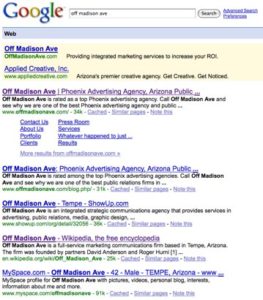
If you’re an agency, why would you NOT cover as many bases as possible with your organic and paid search marketing efforts? The costs are minuscule and the results can be significant. In fact, at Off Madison Ave and Mighty Interactive (where I handle strategy and ideas), search marketing has long been a primary driver of serious new business leads.

If even the big digital shops aren’t buying their own brands in paid search, how many traditional agencies are doing so? If you’re not playing in this sandbox, get on it. You could literally have a campaign up by the end of the day. Similar Posts That You Might Enjoy

Jason Baer

Google’s Popularity is Costing You Money

Monday, June 30th, 2008

Paid search management vendor Covario said today that PPC spending was up 52% in Q1 2008 versus 2007.

52% is a big leap for an already red-hot digital marketing tactic.

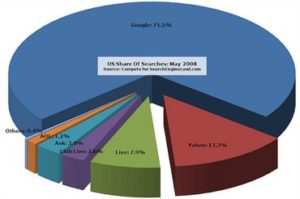
But perhaps more interesting was the finding that Google took in 85% of the paid search spend in the first quarter. (No wonder Yahoo! rushed into their arms after Microsoft blew them off). This points to a big inefficiency in PPC in general. If Google has 71% of the search market based on total number of searches, but 85% of the PPC budget, then substantially more people are spending substantially more dollars in Google than necessary.

Google’s Popularity Means You’re Overpaying

It’s not a mystery why paid search is up 52% and Google has 14% more spend share than eyeball share. In a down economy, marketers want to minimize waste, and Google PPC is the closest thing to a sure bet that’s easily available. (see previous post on digital marketing’s prominence in a recession). Marketers figure that if they have to retrench and focus on results and ROI, Google’s the place to go. But, if everyone is thinking that (and it appears they are), then the price for a click on Google PPC will continue to rise quickly to the point that profitability and ROI are impacted.

I suggest monitoring your average cost per click carefully to see if this trend is impacting you or your clients.

Don’t Dismiss Yahoo!

On a related note, this 85% Google share very much undervalues the importance of Yahoo! to many successful PPC programs. In many cases while working on client projects with Mighty Interactive, we saw Yahoo actually outperform Google. This is especially true for certain brands, as Yahoo’s users skew more female and less technical than do Google’s (and MSN’s users are even more female than Yahoo).

So, if the Google gold rush is pricing you out of the market, swim upstream and put some dollars in Yahoo and MSN where the clicks are cheap and your competition has fled. Similar Posts That You Might Enjoy

Jason Baer