
Over three billion people around the world use social media every month. Out of this, 75% feel that social media platforms play a key role in their purchasing mindset. This shows how a good social media strategy is a must for businesses that want to come out on top.
But with the constantly changing trends and increasing social media competition, it isn’t easy to make a mark today. So, where should you begin from? Your best bet is to audit your current social media channels to find improvement opportunities and make changes that drive better results.
In this article, we’ll dive deep into the world of social media audits to discuss the what, why and how, so you can give your social media profiles a facelift and pave your way towards enhanced brand awareness.
What is a social media audit?
To stay on top of your brand’s online presence, you need to evaluate and optimize its social media profiles. This process is called social media auditing. Conducting social media audits regularly is instrumental in reaching your engagement goals because it helps you identify the strengths and weaknesses of your social handles and develop a cohesive social media strategy that can drive your business forward.
Many facets come together to conduct a comprehensive social media audit that reveals the good, bad and ugly of your profiles—only to help you improve your game and better engage your audience. It includes:
- Performance Metrics: To understand how your profile fares with your Key Performance Indicators (KPIs) like conversions, engagement, followers and clicks.
- Social Listening: To track online conversations around your brand, so you can boost customer engagement by interacting with your audience, protect brand reputation in case of fake news and respond to customer feedback.
- Content Pillars: To maintain a consistent brand voice and provide niche-specific content to your target audience.
- Hashtags: To understand which hashtags are specific enough to increase the reach and engagement of your posts.
- SWOT Analysis: To analyze strengths, weaknesses, opportunities, and threats to get a snapshot of your social media performance and identify areas for improvement.
Many social media tools on the internet can help you conduct a social media audit seamlessly to get accurate insights. Yes, the sheer volume can make it hard to single out the top-performing ones, but here’s a curated list of great platforms to begin with:
- BrandMentions: Get alerted whenever your brand is mentioned across social, news, blogs and videos.
- Agorapulse: Schedule content, discover trends and access detailed analytics.
- Followerwonk: Audit your Twitter performance and analyze what type of content gets the most followers to tailor your social media strategies accordingly.
- Phlanx: Analyze your engagement rate on Instagram to measure the success of each social media post in your marketing campaign
- Facebook ads library: Explore all ads running on Facebook and Instagram to understand what your competitors are upto and get ideas for enhancing your content strategies.
- Sociality.io: Create in-depth content calendars, publish posts and track news about your brand.
- Hypeauditor: Pick and choose the best influencers for your business by analyzing quality of audiences and engagement.
- Analisa: Analyze your Instagram and TikTok content to understand your engagement rate, follower count and post performance.
Why should you conduct a social media audit?
Although conducting a social media audit may seem like a long and drawn-out process, the insights will help you get the most out of your social media efforts and get greater engagement and conversions that impact your bottom line.
Here are some ways conducting social media audits can help you:
- Allows you to keep a pulse on what people say about your brand and competitors.
- Provides in-depth information on your current social media performance.
- Helps identify opportunities to tap into a new market or target group.
- Spotlights the engagement strategies of your competitors, so you can learn from them and engage your audience better.
- It gives you actionable steps to up your social media marketing game and one-up your competitors to create a mark.
5 steps to conducting an effective social media audit
Now that you know the importance of conducting a social media audit let’s look at how to actually do it.
While there are multiple ways to conduct an audit, here’s a simple 5-step process you can follow to begin right away.
-
Analyze your current social media performance
While conducting a social media audit, your first order of business should be to create a comprehensive list of all the social media accounts you currently have on different channels. Dig deep into each profile and look for inconsistencies in brand voice, theme and style guide.
Note down these inconsistencies on a Google Sheet and share it with your creative team. Then, create a timeline to revamp your social channels’ overall look and feel.
Ideally, an optimized profile should have a relevant social media account name, brand logo as the profile picture, an optimized bio that tells users what you do, the products/services you offer and why they should follow you, along with a Call-to-Action (CTA). SkullCandy is a case in point.

The next step is to identify well-performing posts to understand their virality factor. This will help you understand what type of content works well with your audience.
Nearly 94% of marketers in the B2B space prefer using Linkedin to distribute their content. They leverage tools like LinkedIn Social Selling Index to measure the authority they gain through their Linkedin-driven sales strategies and identify improvement areas to optimize their strategy further for better performance.
Derive inspiration from competitors
Around 90% of Fortune 500 companies engage in competitive analysis. Studying your competition can help you zero in on your own company’s Unique Selling Proposition (USP).
Here are three sure-fire steps to conducting an effective competitive analysis:
Make a list of your top competitors
Open Google Adwords Keyword Planner, and enter some keywords related to your business. The tool will show you where these keywords are ranking, along with their search volume. You can then enter these keywords in the Google search bar and understand which businesses are ranking the highest for them—these are your competitors.
Similarly, you can also enter your competitor’s website and understand which keywords rank higher on the search engine results page.
Analyze their current strategy
Gather intel on your shortlisted competitors’ strategies, themes and content pillars by evaluating their active social media profiles. Use Twitter Lists to keep a close eye on what kind of content they’re tweeting, and sign up for their newsletters for more insight.
You can also ask yourself questions like:
- What platforms are my competitors on?
- How often do they post?
- What is their engagement rate?
- What are they missing out on that I can address to one-up them?
- How can I provide a better social media experience to my audience?
Use the insights to guide your implementation strategy
After completing the analysis, draw up your action plan to act on your findings and optimize your social media channels to improve performance and engage with your audience better.
Zero in on suitable social media channels
The platforms you choose for your business entirely depend on your target group. For example, if your audience includes marketers and C-level or VP executives, it doesn’t make sense to focus your marketing efforts on Instagram—you’re likely to perform much better on a B2B platform like Linkedin or Twitter.
Another great way to understand which platform you should be on is to analyze how your audience interacts with your content. Do you get more likes on your Instagram reels, or do thought-leadership articles on Linkedin garner better attention?
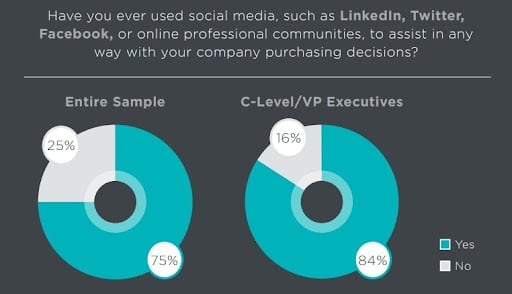
Depending on your engagement, choose a few primary channels to focus your social media efforts on. In an IDC study, three out of four B2B buyers and eight out of 10 executive buyers in the survey relied on social media to make purchasing decisions.
Here are three platforms you can use if you have a B2B audience:
- Perfect for posting company updates and keeping up with trends through Twitter hashtags.
- Allows businesses to keep track of brand mentions and gain insights into customer pain points and brand perception.
- Best to create bite-sized content under 280 characters that can quickly capture audience attention.
- In B2B marketing, 80% of leads sourced through social media come from LinkedIn —making it an ideal platform to find new customers.
- LinkedIn accounts for 46% of social media traffic to B2B websites, demonstrating its effectiveness in driving traffic to your website, and driving conversions and sign-ups.
- 69% of social media users believe Linkedin is the best platform for authentic and high-quality content, contributing to brand credibility.
- Business decision-makers are 1.3x more likely to watch product demos on Facebook, making it an effective space to approach prospects and boost content engagement.
- According to Meta, business decision-makers, your primary target audience as a B2B brand, spend 74% more time on Facebook when compared to other people on the platform.

Identify opportunities from new social media platforms
The next step in your social media audit is to look for opportunities where you can establish your brand’s presence because there’s a huge world beyond Instagram and Facebook on platforms like Peanut and Caffeine.
For example, a women’s fashion brand would do well on Pinterest, given that the majority of the platform’s users are women. Similarly, Twitch and Discord are great options for gaming brands. Several businesses are also exploring audio platforms like Twitter Spaces and Clubhouse to engage in real-time audio conversations.
Here are some steps that can help you recognize new opportunities to establish your social media presence:
- Refer to the list of shortlisted competitors from your competitor analysis.
- Check out the websites to understand which platforms they’re on.
- Make a list of all new platforms and identify if your audience is active on them.
- Conduct in-depth research about each platform’s user demographics and content types.
- Create a list of pros and cons to understand which platform is right for you.
If the pros of a particular platform outweigh the cons, create an account on it and analyze the performance of your posts to see whether marketing on this platform is worth your time and effort. Use analytics to validate your decision to be present on a platform and tweak your strategy accordingly for better performance.
Create an implementation plan
Now that you know which social media platforms your brand should focus on, begin creating and tailoring content for each one of them. Your Lifestyle Business has an easy 5-step system for this:
Step 1: Identify the purpose of your content. Do you want to build brand awareness, trust boost sales, drive traffic to your website or improve customer loyalty? Tailor your overarching content pillars based on the answer to this question.
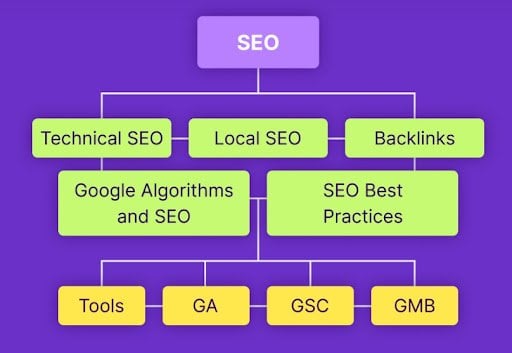
Step 2: Use the pillar and cluster technique to organize your social media content into specific topics areas and create topic clusters. For instance, if you’ve chosen “social media marketing” as a content pillar, you can divide it into more specific topics like social media analytics, influencer marketing and paid ad campaigns.
Here’s an illustration of how SEMrush zeroed in on “SEO” as their content pillar and further divided it into smaller topic clusters:
Step 3: Write down ten questions per cluster. Create social media posts based on the answers to these questions. This will give you a content bank of around 50 pieces of social media content.
Step 4: Create a content calendar. Once the content is ready, you can schedule each post through a scheduling tool like Planable.

Step 5: Repurpose your posts to create a content bank that’s tailored to all the platforms you’ve identified in the previous steps.
For instance, Linkedin posts are often long and text-heavy, while Twitter posts contain snackable content. So, if you’ve created a content calendar for Linkedin, you can repurpose all of the posts by cutting down the fluff to retain key points and post them on Twitter as a thread. You can follow the same process and repurpose content for different platforms as well.
In B2B marketing, 80% of leads sourced through social media come from LinkedIn Share on XTrack results over time
You can’t just conduct a social media audit once and call it a day. You need to constantly track your social media profiles to ensure you’re targeting the right set of audiences, creating content that works for you, and are on the right platform.
If you want to generate consistent ROI, you need to perform regular audits.
Here are a few steps to guide you through the process:
Step 1: Identify two or three SMART goals you want to achieve by your next audit.
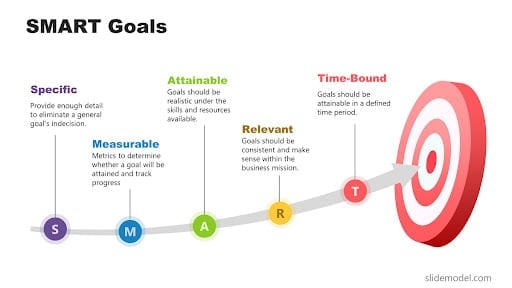
This means that whenever you’re creating goals for your social media strategy, make sure they are specific, measurable, attainable, relevant and time-bound.
Here’s an example:
- Specific: Boost engagement on Twitter
- Measurable: Get 10 comments, and 5 followers per post
- Attainable: Attain 200 followers over 30 days with ads and sponsored posts
- Relevant: Increase engagement rate by 5% to drive brand awareness
- Time-bound: Achieve 10,000 post views in 30 days
Step 2: Choose relevant metrics to measure performance
Start tracking your results (we suggest doing it every quarter). You can assess how social media is contributing to your larger business goals by tracking social media metrics like:
- Sentiment analysis: Evaluate the overall perception of your brand, whether it’s positive, negative or neutral.
- Brand-specific keywords: Understand which keywords work for you and keep updating them with changing trends.
- Audience insights: Gather demographic data of your target group. Study their interests, preferred language, income level and unique interests..
- Engagement rate: Analyze the number of reactions, comments, shares, and clicks on your social media posts during the specified period
Step 3: Create detailed reports to validate your strategy
Develop in-depth reports of your social media performance for every quarter. For this, refer to the goals you set in the first step and see if you’ve succeeded in achieving them. If you haven’t, playback your social media strategy and identify loopholes, areas of improvement and weaknesses. Use data to understand why you couldn’t achieve your goals and optimize your strategy to get better results.
For example: if you wanted to gain 100 followers on Twitter in 30 days but could only manage 30 followers—look at your impressions per post, month-on-month growth in followers, and engagement. You can also use Twitter Analytics to see your high-performing posts and include more of such in your content strategy.
You can use these to change course and get a better outcome in the next quarter.
Conclusion
Conducting a social media audit may seem intimidating at first, but the process becomes intuitive after the first few cycles. With the right elements and a few SMART goals to back them up, you can boost your social media presence and ROI.
Always remember to keep looking for new platforms and trends to latch onto. After all, staying relevant is crucial in today’s changing business landscape.