Posts Tagged ‘ppc’

Why PPC is about to skyrocket - and then CRASH

Tuesday, October 14th, 2008

Times are tough.

But one area that is ready to soar is pay-per-click search marketing (PPC). That most measurable and controllable of digital marketing opportunities, PPC looks like a no-brainer in this economy.

Have you called a newspaper lately and asked them if they’ll charge you per phone call generated? Even with ad sales down 14% year over year, they won’t do it. 

Thus, with the holiday season approaching and a flinty consumer base not exactly killing themselves to buy the latest electronics or must-have toy (it’s Foreclosure Elmo), PPC looks like a no-lose proposition for retailers and e-tailers.

PPC - The Rich are Going to Get Richer

With PPC spend already up 52% in Q1 2008 versus 2007, the number of PPC advertisers and the money they’re going to throw at clicks is about to get insane. The competition for clicks, leads and sales in the 4th Quarter is going to be fierce, and I suspect there will be some “make us #1 no matter what” money in the game as casual PPC advertisers pull money from TV and print. 

It’s going to require exceptionally smart bidding (think day-parting) and a serious commitment to landing page testing to succeed. 

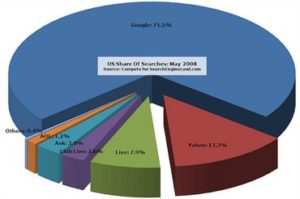
The problem is, this huge thirst for clicks is going to drive average cost per click through the ceiling. Google is already substantially most expensive on a per click basis than is Yahoo or MSN. Further, according to Efficient Frontier and their excellent Q2 search engine report (PDF) Google is getting $1.10 of each new dollar of PPC spend (Yahoo is minus 9 cents, and Microsoft is minus 1 cent). 

PPC - The Rich Are Then Going to Get Poor

The price of a click on Google is going to go WAAAY up over the holidays. So much so that ROI on those clicks will inevitably diminish, especially with consumers in “I think I’ll go to the Hickory Farms store in the mall and have 11 free samples and call it lunch” mode. 

At the end of January, hundreds of thousands of PPC advertisers will look at their reports (especially Google) and say “this isn’t worth it anymore.” 

February 1 will be the day the music died for PPC, and a long period of very modest growth will ensue as newcomers adopt a “we tried that back in 2008 and it almost broke us” mentality. 

Get yourself a killer test plan, a shot of Jim Beam (hat tip to Jason Falls) and manage client (and your own) PPC expectations. It’s going to be quite a ride. 


Sphere: Related Content

Welcome. If you like the content here, consider susbscribing to my RSS feed. You can also find me on Twitter @jaybaer

Jason Baer

5 Reasons Why Digital Marketing Will Thrive in the Recession

Tuesday, September 30th, 2008

From Dot Bomb to Dot Boom

Let’s face it. The economy is taking on the distinctive, sickly pallor of a post Mardi Gras Keith Richards.

Generally, recessions hit the advertising business with the ferocity of a rabid wolverine, and the last one trimmed overall ad spending by 9% according to market researchers Veronis Suhler Stevenson. The wolverine in question mauled and devoured online advertising, which plummeted 27% over two years during the last recession.

This time it will be different. Not only will online marketing survive, it may actually thrive during the lean times, continuing its inexorable theft of ad spend from traditional media tactics. Online is far more mature and proven now, and there are five specific reasons why it will be the go-to tactic among increasingly budget-conscious marketers.

Money Talks

First, online is typically less expensive than many other marketing tactics, and a sizable and impactful online effort can be undertaken more quickly and cost-effectively than can an offline campaign.

Wiggle Room

Like an Elizabeth Taylor marriage, online doesn’t require much long-term commitment. PPC ads can go up and down on a day-to-day basis. Email can be sent (or not sent) based on financial considerations. Even banner ads can usually be negotiated with an advantageous cancellation clause of 72 hours or so. Try that with your local TV station or newspaper. Other than keeping your Web site up to date, the only core online tactics that require substantial ongoing effort are organic search optimization, and Web site analytics and testing.

More Juice for the Squeeze

With diminished outbound marketing budgets, companies will shift focus toward increasing revenue from current customers, either through more frequent purchases, or larger ones. Email marketing is the perfect vehicle for communicating with customers and incentivizing additional purchases. Customer lifecycle marketing (persuasively combining email with direct mail, voice mail and text messaging) will gain favor as companies strive to close a higher percentage of a reduced flow of leads.

Waste Not

There is meaningful financial waste associated with advertising to people who have no interest in your product or service. The superior targeting ability of online marketing will enable companies to focus their reduced marketing dollars solely on likely prospects. This will accelerate the trend toward use of behavioral targeting and retargeting in online ad placement.

Behavioral targeting mines a person’s Web page visits and search terms to serve relevant ads. If a prospect reads several pages on Yahoo! about Nissan Altimas and does a search on Yahoo! using a related term, an ad for Valley Nissan dealers can be served up just in time.

Retargeting (a nascent industry led by local company Fetchback) takes the concept one step further, enabling companies to advertise only to people who have visited their Web site previously without making a purchase. With average conversion rates hovering around 2%, this is an ideal way to reach the other 98% that have taken the time to visit your site but haven’t yet converted.

Additionally, search marketing will continue to expand since it is the only tactic (other than Yellow Pages) that puts the marketer in the middle of the consumer’s purchase psychology funnel. I expect heavier bidding on specific, “long tail” search terms that often correlate with greater intent to purchase.

Numbers Don’t Lie

Online marketing of all types offers superior measurability and trackability in comparison to traditional tactics. This is of course due to the Orwellian nature of the Web, where every mouse click is tracked, usually anonymously. While the availability of this data may give you the same creepy feeling you get when gazing upon Joan Rivers, it makes for effective marketing.

When implemented correctly, banner ads, organic search, paid search, blogs and social media, email, lifecycle marketing and all other online marketing tactics provide a user by user scoreboard that can be utilized to ascertain precise return on investment metrics for each campaign.

In this way, online marketing provides companies the ability to test a wide array of tactics, evaluate which generates the best response, and then adjust the marketing program accordingly.

The old saying is “I know half my marketing dollars are wasted. I just don’t know which half.” This problem is even more acute and painful in a down economy when advertising dollars are curtailed. The inherent cost, targeting, and tracking advantages of online marketing make it more likely to succeed (or at least able to minimize losses from a failed campaign). And when a wolverine is at your door, that’s the type of assurance you want from your marketing strategy.


How I help ad agencies & PR firms get better at digital marketing>>
Get my blog posts in your email>>

Sphere: Related Content

Jason Baer

5 Memorable Lessons from my Sarah Palin PPC Campaign

Monday, September 8th, 2008

Thanks to everyone for participating in my “Are you man enough to write a PPC ad about a woman VP” contest. Many excellent entries (see original post). Here are the results:


McCain is 72 years old 
Avg US life expectancy is 78 years 
Is Palin qualified? Read This 
DailyKos.com   1.31% Click-through rate      


Sarah Palin’s Secrets 
What the GOP doesn’t want you to 
know about McCain’s running mate 
sify.com 

2.66% CTR


Sarah Palin Revealed 
What makes her so special and 
why the Democrats should worry 
johnmccain.com 

3.62% CTR


Who is Sarah Palin? 
Exclusive stories, photos and more 
on the Vice Presidential candidate 
newsminer.com 

4.89% CTR!!!


Congratulations to Russ Hollmann (@hollmann) for winning the PPC Contest. He gets $200 from yours truly. 

Thoughts on the Outcome

I’ve been looking at the results and thinking about why Russ won and what we can learn from this contest. I’ve learned 5 lessons from this experience.

1. Mindset of searchers. Interestingly, Google took 3+ days to approve the ads. A call to tech support couldn’t even resolve it. Amazingly, they began running immediately after Palin finished her convention speech (insert conspiracy theory here).

Consequently, once the ads finally went live, I suspect there were more pro-Palin searchers than anti-Palin searchers, hurting the CTR of the lefty-slanted ad candidates.

On a similar conspiracy-scented note, the ads were set to run evenly for testing purposes. However, Google served 175% more of the pro-Palin or neutral ads than they did the negative ones. Hmmm.

2. URLs matter. I forgot that I had to put “real” URLs on the ads - not like the old days when you could do whatever you wanted. Thus, instead of having the same URL for each ad, I had to have the actual URL of the news story to which I linked. See above. For some, DailyKos is Kryptonite. The JohnMcCain.com URL may have been interpreted as less than objective (shocking, I know). The sify.com URL seems mysterious. Newsminer.com sounds objective and “newsie”. That may have helped Russ’ entry.

3. Don’t minimize your audience. Of all the finalists, the winner was the most even-handed. The other ads were clearly more appealing to one side or the other, which may have truncated their appeal commensurately. If you’re running a PPC campaign and are looking to maximize clicks, it may not work as well to take a strong stand in the ad itself - wait for the landing page.

4. Specific promises. In comparison to the other finalists, Russ’ entry promised stories, photos and more. I have seen through 15 years of Internet marketing experience that when you tell people exactly what they will get when they click, they are more likely to take you up on that offer.

5. Use of impact words. While all of the finalists used turns of phrase to make their ads interesting and engaging, Russ’ inclusion of “exclusive” may have helped win the contest. Given that by the time these ads launched, pretty much everyone not in prison knew at least something about Sarah Palin, the appeal of “exclusive” information may have been extremely intriguing.

How do you interpret these results? Add a comment

My digital marketing training workshops for agencies>>

Get my blog posts in your email>>

Sphere: Related Content

Jason Baer

And They’re Off…Palin PPC Finalists Selected…Ads Live on Google

Monday, September 1st, 2008

Thanks to everyone who participated in the Palin PPC contest (see post below).

It was difficult to select 4 ads to test live on Google, but ultimately I choose these:

Sarah Palin’s Secrets
What the GOP doesn’t want you to
know about McCain’s running mate

from James Archer (@jamesarcher)
I like this one because it’s a solid tease with a lefty slant.

Sarah Palin Revealed
What makes her so special
and why the Democrats should worry

from Johnny M (@thesoop)
This is a great counterbalance to the first one. Similar approach with a righty slant.

Who is Sarah Palin?
Exclusive stories, photos and more
on the Vice Presidential candidate

from Russ Hollmann (@hollmann)
This one is very plausible as an actual ad. I’m interested to see the CPC of this more factual approach.

Lastly, but not leastly….

McCain is 72 Years Old
Avg US life expectancy is 78 years.
Is Palin qualified? Read this.

From Tony Sirois (@tbonemalone)
Solid. I love that this effort hits right at the core issue of Palin and does it in 15 words.

Get my blog posts in your email>>

What? No Nudity?

Certainly, there were some entries that probably would have generated a higher CTR than those above. However, since I have to actually build an ad group and run these ads - and link them to a landing page - I wanted to stay away from anything along the “Palin: Naked and covered in Skippy peanut butter” vein.

All good interactive marketers know that it’s not about clicks, it’s about qualified clicks, so I selected the 4 finalists in that spirit.

I’m running the same display URL for all ads www.thesarahstory.com since it fits all of the ads. I scoured the Web and found different news coverage and blog posts about Palin to fit each of the ads, in an effort to keep Quality Score high enough to keep the ads live.

Cheaters Never Win

Finalists, please don’t recruit an army of friends to click on your entry so you can win my $200. Hopefully, you value the scientific and social media nature of this experiment enough to not do that. I reserve the right to not pay you if I think you gamed the system.

Ads should be live until Thursday night - again assuming the CTR stays high enough for them to keep running. Results will be announced on Friday. Thanks for playing!

Who Do You Think Will Win? Make Your Prediction In The Comments

5 Great Workshops to Train Agencies on Digital Marketing>>


Sphere: Related Content

Jason Baer

Win $200 in the Palin on PPC Contest

Friday, August 29th, 2008


Are You Man Enough to Write a Great PPC Ad About a Woman VP?

I’m using the puzzling choice of Sarah Palin as McCain’s VP pick to engage in a crowd-sourced search marketing experiment. Namely, who among you can write the most effective Google PPC ad featuring her?

The winner will receive $200 cash from the gilded vaults of Convince & Convert, as well as big-time bragging rights throughout Twitter, the Blogosphere, and maybe even among real people. 

The Rules

  • Enter this scintillating contest by adding your best effort to the Comments of this post (see below).
  • One entry per person please. Honor system.
  • All entries are due by 6pm Pacific, 9pm Eastern time on Monday, September 1. This gives you something to do over your Labor Day weekend.
  • The top 4 semi-finalists will be selected by me. I may throw open voting on Twitter if we have some close calls.
  • I will create and launch a PPC campaign on Google next week and will run the semi-finalists as an A/B/C/D test. Bid amounts will be the same for all ads, etc. Search terms will be “Sarah Palin” and “Palin” - broad match
  • The winning ad will be the one with the highest average click through rate, and will be announced next Friday-ish, September 6.
  • Winner will receive $200 cash, check, or PayPal from me, and the opportunity to write a guest post on Convince & Convert about their winning technique.

Remember…

Google Adwords allows 25 characters (including spaces and punctuation) in the headline, and 35 characters for each of the two body copy lines. Please format your entry as:
Headline
Line 1
Line 2

…in the comments section. Don’t worry about a URL. I’ll make something up.

It’s Sarah, not Sara.

Sphere: Related Content

Jason Baer

The Truth About Publicis Buying Performics

Wednesday, August 6th, 2008

In a sign that major advertising agencies are continuing to recognize the long-term profitability of search marketing, Publicis Groupe bought Performics from Google today.

One of the largest search marketing agencies, Performics will join Digitas and other Publicis entities as part of VivaKi Nerve Center (no, I am not making this up) the new strategic collective cobbled together to serve Publicis clients world-wide.

3 Reasons Why Publicis Bought Performics

1. Search marketing is entirely mainstream now, and represents a “must do” tactic for essentially every Publicis client

2. Search marketing is projected to grow (by JupiterMedia) at a minimum of 12% annually through 2012, and there’s not many other marketing tactics (maybe social media and mobile) that are likely to achieve that level of compound growth

3. Search marketing is a “forever” tactic. Once you start, you can’t just stop doing it, because all that hard work will be washed away quickly. Thus, search marketing for major brands can be a $1-3 million per year, every year service fee, with extraordinarily high profit margins of 25% plus.

Note that Publicis has stated that they want 25% of their overall revenue to come from digital by 2012, and this acquisition will help make that a reality. There’s not that many serious search marketing agencies that have the scale necessary to fit in with Publicis, it’s still a very fragmented market, so the Performics acquisition makes sense.

Plus, Google and Publicis have a long-standing cross-functional relationship, including sharing of executives and intellectual property. 

Interesting that many smaller, traditional agencies totally eschew search marketing as “too complex” and “not worth it”. I wonder if this acquisition will change some minds in that regard?

Why Google Sold Performics

It always seemed a bit strange for Google to own a search marketing services company. Performics was acquired as part of Google’s purchase of display ad network pioneer DoubleClick. The DoubleClick purchase was strategically imperative to close the gap between Google and Yahoo! in the display ad business, but the Performics search and affiliate program unit was always an extra appendage. 

Rumors about Google selling off the search marketing component of Performics were confirmed on the Google Blog in April of this year. 

Certainly, it’s a conflict of interest to have Google own a huge search marketing company, when they are the dominant vendor/partner of that company, and their ownership of Performics surely made iCrossing, Did-It, and other large search firms nervous. 

But ultimately, Google got rid of Performics because they learned what they needed to learn about how search firms work, and they got out. I predict that you’ll see a whole new suite of paid search tools from Google, based on their learnings from Performics. That’s the Google way. They bought Urchin, looked inside its guts, and PRESTO you get Google Analytics. 


What do you think about this deal? Does it portend a new round of acquisitions by traditional agencies, scooping up search marketers? Is iCrossing the next to sell? Or is it just one company trying to make a splash to drive awareness of the VivaKi Nerve Center? Also, if you can coherently describe what a VivaKi Nerve Center is, please leave a comment! 


How I help ad agencies & PR firms get better at digital marketing>>
Get my blog posts in your email>>


Sphere: Related Content

Jason Baer

Agencies Need to be Testing Landing Pages

Monday, July 21st, 2008

Average length of stay on a Web site is approximately 2 minutes and 30 seconds overall. Approximate length of stay by visitors coming from search is about 10 seconds. Why the difference? Search users are less likely to know your company and its attributes in advance, and they know there are several other options available to them simply by clicking “back”. In short, search engine users have the attention span of a 4 year-old after three s’mores and a cup of grape Kool-Aid. 

Most marketers engaged in even semi-serious pay per click programs have determined that creating specific “landing pages” to sync with particular search terms can help combat the flighty nature of search users. If a user searches for “mustard” on Google and clicks on your ad, you don’t take them to your home page, you take them to a page that’s all about mustard. You don’t even mention ketchup. Why confuse the user with information that doesn’t specifically address their needs?

This ability to determine the specific interests of the consumer (via their search phrase) and give them marketing messages that match is perhaps the most powerful capability of the Web as a whole. It’s as if consumers are walking around with thought bubbles over their heads describing what they want to buy. 

Not to be ignored is the important fact that Google (and I presume Yahoo!) are now including the content (and download speed) of landing pages as components in the “quality score” that determines where your PPC ad appears in search results. Meaning, if the page that lies behind your Google ad is not uber-relevant to the query, your ad will be penalized for it. This makes creating great landing pages a necessity, not a luxury. 

For agencies, the creation of landing pages is a critically important service that is not often being offered to clients with the appropriate voracity. If the client is thinking about a Web site redesign, but isn’t ready or doesn’t have the budget, creating a series of outstanding landing pages can help the agency prove its Web design mettle. Further, if a variety of messaging and/or design approaches are being considered for the new Web site, testing the efficacy of those approaches on landing pages is a smart move. 

Because they lie directly in the consumers’ research and purchase funnel, landing pages provide extraordinarily useful data that can be extrapolated for use in other online and offline marketing programs. Offer testing, photo testing, price point testing. All of these can be accomplished with landing pages with relative ease.

In fact, a rigorous and ongoing program that tests new landing page components (including multi-variate testing) can have tremendous bottom-line impact for clients, and makes the agency a hero. A multi-variate test that we conducted at Mighty Interactive for a student loan company generated a 40%+ increase in leads - resulting in a financial gain of hundreds of thousands of dollars for the client. 

When testing landing pages (and really any digital marketing element), remember that small changes can make a big difference. Background colors, font, spacing, photos, headlines and more can all impact whether a consumer will buy now or buy never. Don’t overlook button labels, either. Your action button is the last thing the consumer reads before determining whether to take action. Labeling it “submit” or something equally uninspired is missing a tremendous opportunity to set the hook at a critical time. 

If you have a landing page testing success story, let’s hear about it. 


Sphere: Related Content

Jason Baer

Google to Show Search Volume - Another Blow to Agencies

Tuesday, July 15th, 2008

In a LOOOOONG overdue move that provides some much-needed transparency to the PPC business, Google has added search volume data to their keyword research tool

This means that when you use Google to research potential search terms for your clients’ pay-per-click campaign, Google will actually give you an idea of how many people actually search for that term each month. Useful data when you determine that only 2 people per month search for “heirloom cucumbers kansas” so perhaps that phrase shouldn’t be the cornerstone of your search marketing efforts.

If you’re not involved with PPC on a daily basis, you may be thinking “well of course they would tell you how many people search for each phrase, how else could you even figure out which phrases to bid on?” Welcome to Planet Google, where information is doled out in maddeningly small and disconnected doses like plot points on Lost.

It is of course ridiculous that this data was not provided historically, especially since GoTo/Overture/Yahoo showed search volume from the beginning, and they pioneered PPC, not Google. But, Google’s moxy to hide a critical piece of marketing information has been a boon for search agencies and consultants, who use third party tools like WordTracker (a nice little company that is probably stocking smelling salts in the cafeteria after this announcement) to find this data for clients. 

While this announcement may seem out of left field, I see it as another move in a series designed to disintermediate agencies and move small and medium sized advertisers into the hands of Google directly. Google Analytics makes having a Web analytics consultant less necessary for some. Google’s Ad Planner makes an online media consultant less necessary for some. Google’s TV Ads and Radio Ads services make a traditional media consultant less necessary for some. 

Trouble for Agencies, but an Opportunity

Ultimately, it appears Google’s desired end game is for all small and medium sized advertisers to conduct all marketing transactions directly with Google, leaving agencies to deal with the big clients. For advertising agencies, this is both troubling, and an opportunity. If Google makes the marketing and advertising business as transparent as travel planning and stock purchases, the only agencies that will be able to survive are those that can add real value in messaging, creative, and integrating data into actionable tactics.

The transactional components of the advertising agency model like media placement, and the other services like Web analytics that are based on access to data will evaporate. Agencies must commit to being thinkers, rather than doers to succeed in this environment. Setting up a PPC campaign won’t cut it much longer. Managing a PPC campaign with rigorous testing that incorporates insights from offline tactics will be the level of expertise required for an agency to charge for search marketing - and that day will be here quickly.


Sphere: Related Content

Jason Baer

Media Buyers Say Internet Advertising Will Grow in Next 6 Months

Monday, July 7th, 2008

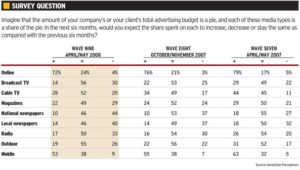
Market Research firm Advertising Perceptions released a new survey of 1,811 media buyers showing that a whopping 72% of them believe Internet advertising spend will increase in the second half of 2008.

This is a shocking finding, considering that no other medium (other than mobile) was expected to grow by more than 28% of the respondents.

The outlook for newspapers and radio was especially pessimistic, with more than a third of respondents projecting overall spend to drop for those media in the next 6 months.

While we’re big supporters of mobile here at C&C, 55% of media buyers suggesting that mobile spend will increase was also a suprise. As a somewhat experimental tactic, we’d expect mobile to be set aside temporarily in this down economy. However, the measurability of mobile (which is also a terrific database acquisition tactic) could be fueling the optimism about it.

Without question, the measurability of Internet advertising and search marketing is what’s driving the move of ad dollars from traditional tactics like newspaper toward digital marketing. This move is going to be even more acute in a recession, as digital’s cost-effectiveness, speed of deployment, and targeting capabilities make it a “safe” media bet for most companies and agencies.

It will be very interesting to see if this movement of ad dollars toward digital results in markedly higher CPMs for banner ads by year end. We’re already seeing increases in PPC costs due to the “over-popularity” of Google.

Sphere: Related Content

Jason Baer

91% of Top Digital Agencies Not Buying Their Own Brands on PPC

Tuesday, July 1st, 2008

In a shocking (and embarassing) revelation today, AdWeek uncovered that of the 56 world-class digital marketing agencies featured in their Annual Report Card, just 5 are purchasing their own brand names in PPC.

In fairness to the firms, most of them appear at or near the top of organic search results for their own brand names, but several studies have shown that click through rates (and conversion rates) typically increase when your brand is at the top of BOTH organic and paid search results. Incidentally, this is why the notion of dropping your paid search when you achieve organic search success is a bit of fallacy.

Also of note are smaller firms that are purchasing competitors’ brand names in PPC and showing up in paid search results. A crafty tactic, to be sure. Note that current case law says that you can in fact purchase competitors’ names and trademarks as a search term, but you cannot use those trademarks in your actual PPC ad copy.

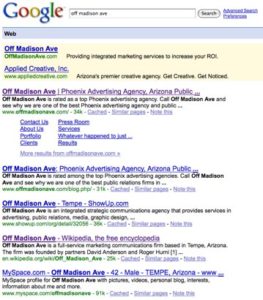
If you’re an agency, why would you NOT cover as many bases as possible with your organic and paid search marketing efforts? The costs are minuscule and the results can be significant. In fact, at Off Madison Ave and Mighty Interactive (where I handle strategy and ideas), search marketing has long been a primary driver of serious new business leads.

If even the big digital shops aren’t buying their own brands in paid search, how many traditional agencies are doing so? If you’re not playing in this sandbox, get on it. You could literally have a campaign up by the end of the day.

Sphere: Related Content

Jason Baer