
AI is now more mainstream than ever.
Seriously, it’s everywhere.
With impacts affecting virtually every aspect of our lives – from everyday activities like shopping and content creation to innovative events like space exploration and medical research – it is set to be one of the most transformative things in the 21st century.
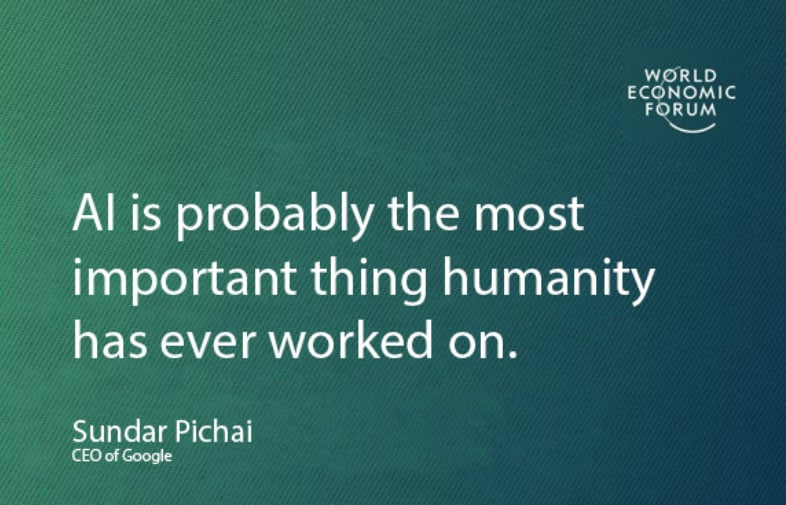
According to a Gartner study, the revenue from AI software in only 2022 is set to reach $62 billion. That is an all-time high number and a 21.3% increase from the numbers the year before.

Meanwhile, a McKinsey survey reports that over 50% of companies use AI in some capacity.
Hence, there are serious indications that AI, alongside other emerging technologies, will largely influence how we operate as individuals and businesses.
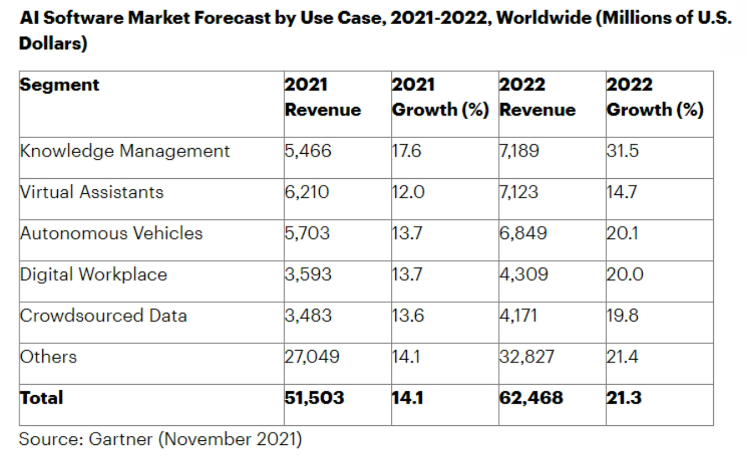
A McKinsey survey reports that over 50% of companies use AI in some capacity. Share on X
That can only mean artificial intelligence is here to stay, and the faster you key into it, the better.
AI is expected to usher in a whole new level of opportunities, automation, personalization, service delivery, and data availability, among others.
Below, I’ll discuss the latest AI trends, the best tools, what benefits they contribute, and how you can take maximum advantage.
Right, let’s get into it.
Trend 1: Generative and Creative AI
For the record, generative and creative AI are two branches of AI, but I’ll combine them in this guide just for the purpose of covering more ground.
Creative AI is a branch of AI that generates art, video, music, poetry, etc., while generative AI is concerned with creating texts. These are some of the most popular fields of AI technology and ones that have gained massive acceptance over the years.
Since the creation of GPT-3 by OpenAI, I’ve seen excellent AI writers and story generators that make content creation tasks a lot easier.
They create natural texts in different languages, and their outputs are unique, error-free, and conform to set tones and styles. This AI technology is helpful for a wide range of purposes and in numerous fields.
Creative AI is equally impressive with features that let you make unique art, automate edits, or apply styles. A number of AI video generators even create videos from texts.
And with GPT-4 and newer creative AI technologies on the way, it’s about to get even better.
For example, look at two AIs talking to each other here.
The actual conversation was generated with GPT-3 by OpenAI, and the video was generated by Synthesia – a popular AI video generator tool.
Isn’t that cool?
Tool 1: OpenAI
So technically, this is not a tool. It’s an API that gives access to the technology of GPT-3.
For software developers who may be interested in the tool, you may consider setting up the infrastructure yourself to generate text.
However, for tools that use the OpenAI – GPT-3 technology, here are two great tools I recommend that anyone can get started on:
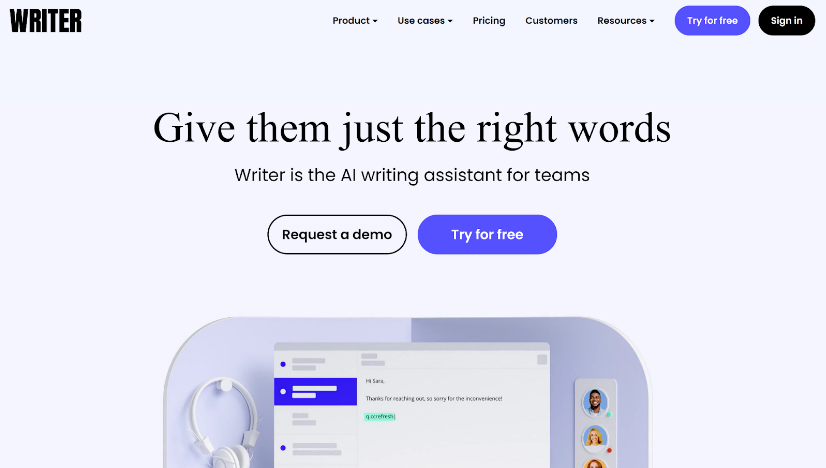
- Writer.com: I’ve had the pleasure to talk to the CEO of Writer, and it’s a great AI writing assistant for teams. It’s a tool that helps you keep a consistent brand style and assists with writing in real-time. You can think of it as your company’s writing assistant for everyone.
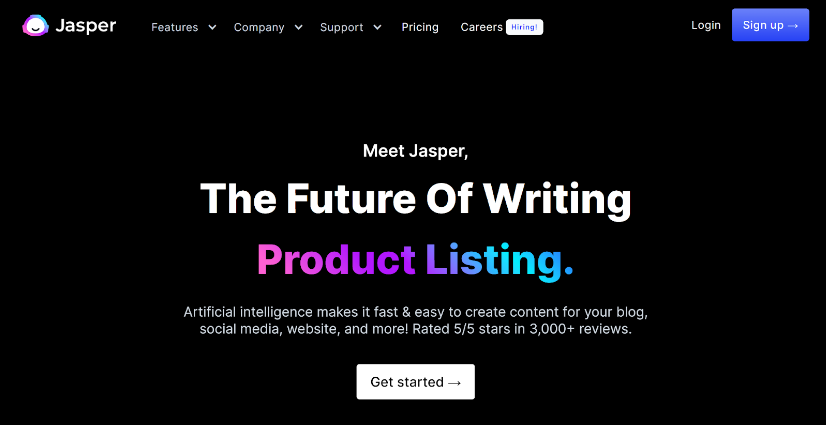
- Jasper.AI: Perhaps the most popular AI writing tool for blogs, social media, and websites to date. It features a wide range of templates and “recipes” to generate any type of content you can think of.
Trend 2: Language Modeling and Conversational AI
Again, two massive branches of AI.
Language modeling uses machine learning to define the relationship among texts. Using large statistical models, language modeling can help computers understand human texts and speeches and how they’re created.
Conversational AI technology makes it possible to engage better with clients, users, employees, etc., using voice commands. It features AI frameworks like natural language processing (NLP) and machine learning to deliver voice assistants like Siri, Cortana, Alexa, or chatbots.
Natural language processing is concerned with human-sounding computer-generated texts and speech, but it does more than that.
For example, NLP does creation, analysis, interpretation, speech recognition, character recognition, and translation. These do not even begin to cover the benefits for individuals and businesses.
It is common to find many industries also using conversational AI, with the main application being chatbots. That includes the financial, travel, marketing, and healthcare sectors.
Tool 2: Azure
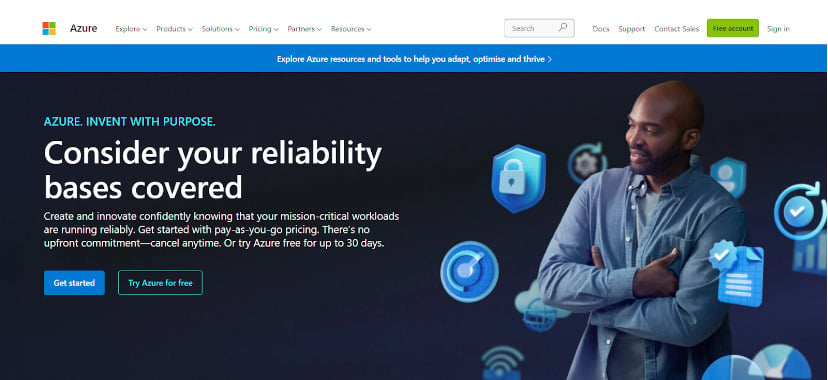
Azure is a product of Microsoft and one of the most sophisticated AI platforms available. This user-friendly platform allows beginners and experts to build and deploy powerful machine learning models – including Language Modeling and Conversational AI.
In addition, Microsoft Azure works with a cloud platform, which gives it more flexibility for more innovative AI designs.
- Easy-to-use interface. Microsoft Azure is perfect for developers of different skill and experience levels, thanks to its no-code design. You can simply drag and drop elements to achieve your models. They are also pretty straightforward to publish from within the software.
- Support for multiple languages and frameworks. The Azure platform works fine with open-source systems like TensorFlow and PyTorch. You can also use Azure with Python, R, etc.
- Robust system for extended use. Data scientists and developers can do so much with a powerful infrastructure. For example, they can create portable pipelines, run NLP, conversational AI, or do knowledge mining.
Tool 3: ChatGPT
It’s a bit sneaky, but this next tool technically also falls under the branch of OpenAI.
Now unless you’ve been living under a rock – hey, I’m not judging – then you may have already seen ChatGPT take the world by storm. The chatbot garnered over 1 million users within its first week of launch.
And for good reason. If you thought the first few tools mentioned were good, you’re in for a ride. ChatGPT is a large language model (LLM) chatbot powered by OpenAI’s GPT-3.5 algorithm – making it the most sophisticated language model in the market yet.
Not only is ChatGPT a generative AI that can answer and do things based on prompts (like writing essays in the style of Hemmingway and HTML code for your website – seriously), but it’s also a conversational AI chatbot. Combining these two abilities makes the use cases for LLM chatbots endless, and the potential implications of using this AI technology are really quite remarkable.
It’s no wonder why everyone is so eager to get their hands on ChatGPT – and you should probably too before they start charging people to use the tool!
Check it out here!
Trend 4: No-Code AI
No code? No problem.
You may have heard about or even used no-code AI platforms before, which shows how much of a trend they are these days. Creating AI systems from scratch is tedious, time-consuming, and usually requires expertise. That’s why no-code AI has grown in popularity.
These systems allow individuals and businesses to build and use sophisticated platforms with little technical knowledge. In addition, no-code AI eliminates several barriers and makes more tech solutions readily available for beginners.
A drag-and-drop function is a common feature of these platforms. The results are time-saving, low-cost apps with quick workarounds for code development, debugging, and troubleshooting.
Tool 4: Akkio
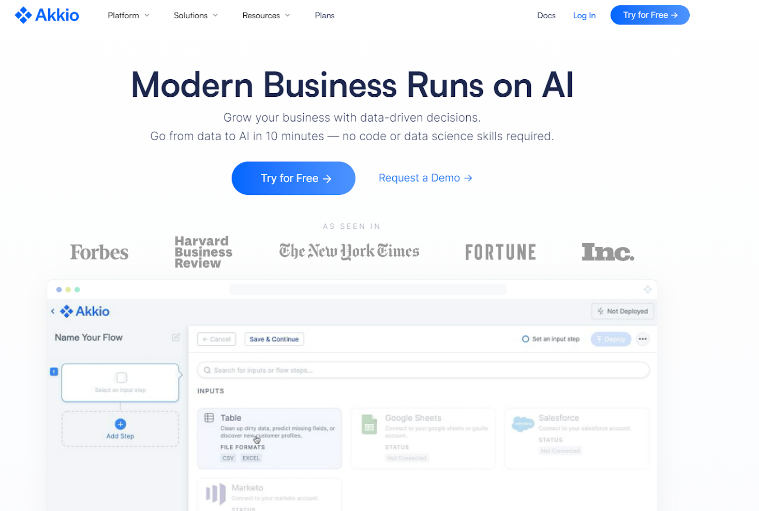
Akkio is one of the leading platforms here as an end-to-end no code AI platform. It is specifically designed to help a range of functions like operations, marketing, sales, and finance to make data-driven decisions.
It promises to “go from data to AI in 10 minutes — no code or data science skills required” and is voted the #1 product of the day on Product Hunt at the time of writing this. Some key benefits include:
- Instant sharing. Share predictions, findings, or any other reports instantly with just a link.
- Ease of use. The best thing about no-code deployments is that it’s easy. As long as you understand data, you’ll be able to serve up actionable insights and solutions for your team.
- High Integration. Akkio has many integrations and is built to be connected with your data so you can route predictions anywhere.
Trend 4: AI Cybersecurity
According to the United States Healthcare Cybersecurity Market report of 2020, there’s been a cybersecurity breach in 90% of United States healthcare organizations within the three years to the report.
Similar issues abound in other industries as the Deep Instinct report says that malware and ransomware usage increased by 358% and 435%, respectively, in 2020.
The World Economic Forum recognizes cybercrime as a massive threat to economic growth. These are worrying issues and statistics that call for quick redress. And it is perhaps why we’ve seen an increase in the popularity of AI cybersecurity trends as more businesses search for how to secure websites and online data.
Since cybercrime is an advanced form of crime, traditional methods may be inadequate. However, with artificial intelligence, you can deploy automatic threat detection and pattern recognition systems. AI can detect threats even before it happens, but more work still needs to be done.
Tool 5: IBM Watson
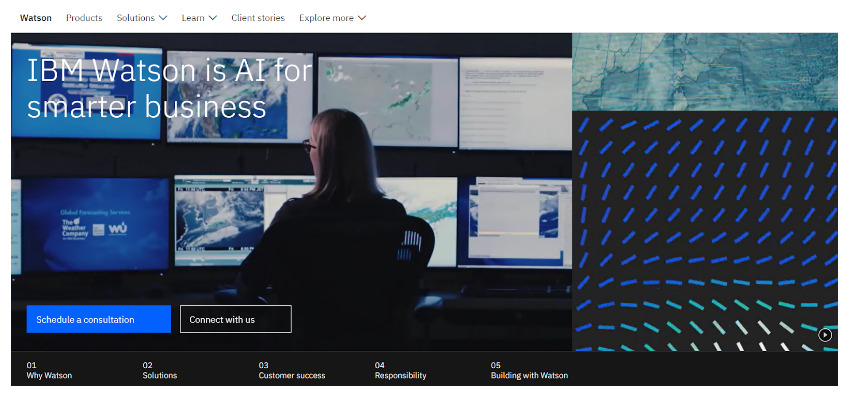
IBM Watson is a leading provider of AI solutions and great for cybersecurity.
Its platform has helped businesses create automation for processes that would have taken way too much time. In addition, IBM Watson is responsible for developing robust and pre-trained systems for predictions, data analysis, and pattern recognition.
That’s not all; they also have a wide range of powerful AI applications that solve several problems. For instance, IBM Security QRadar is a cybersecurity software that detects and solves cybersecurity threats. Below are some benefits of the IBM Watson platform:
- Compatibility with other AI platforms. IBM Watson works well with major AI platforms and systems like Google Cloud Platform, Amazon Web Services, and Microsoft’s Azure. Therefore, it offers the flexibility to do more by leveraging more tools.
- Powerful automation for repetitive tasks. With IBM Watson, businesses can transform their processes and improve output by implementing intelligent automation.
- Advanced security and risk management. This tool has an advanced system for safeguarding data and ensuring safety. Therefore, it is perfect for companies that are required to comply with risk management systems.
- Get essential insights from available data. IBM Watson also delivers insights and analytics from structured and unstructured systems. So, it might help you solve that marketing metrics app issue.
Trend 5: AI Automation
Automation is one of the essential benefits of artificial intelligence. It involves identifying repetitive tasks and replicating them without human input or making necessary suggestions based on the functions. Another aspect involves specifying actions alongside factors that should trigger them.
AI automation is already quite popular since AI is primarily based on ‘learning’ human behavior. It studies patterns over time, registers them in memory, and replicates the same thing whenever necessary.
That’s why implementing automation will result in a streamlined workflow, better collaboration, and higher ROI.
This AI technology will help companies achieve more productivity while reducing business costs, especially those with hundreds of repetitive tasks.
However, you can expect improvements to AI automation as time goes on. For example, bots and machines will be more intelligent to understand patterns better. Siemens, Honeywell, Stoic, Mitsubishi, and Schneider are some companies that are already automating their processes.
Tool 6: Salesforce Einstein
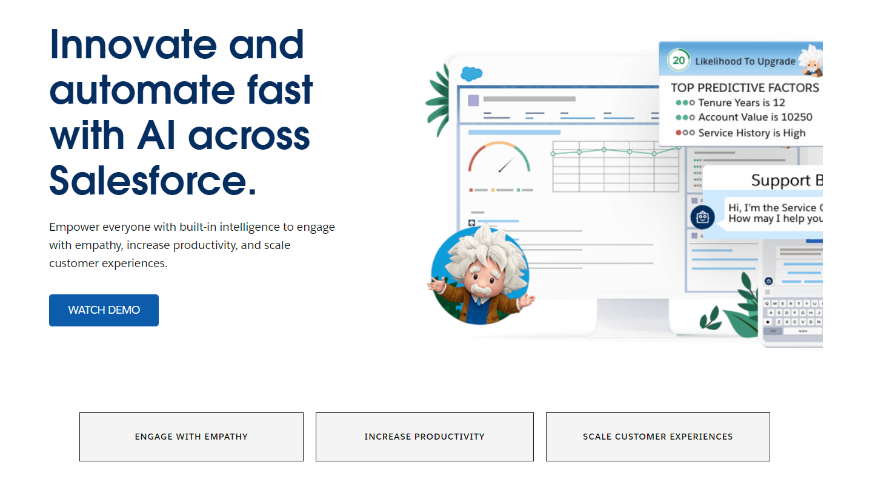
While many AI tools help with automation, I’d like to make special shout-outs to Salesforce Einstein: an AI platform for building customer relationship management (CRM) and analytics applications for employees and customers.
This tool leverages the Salesforce platform to provide unique business solutions that enhance customer experience through AI. Below are some of its main features:
- Sophisticated models built with ease. Salesforce Einstein offers multiple technologies like machine learning, computer vision, and natural language processing to create unique predictive models.
- Multiple opportunities from a single platform. With this tool, businesses can develop all the marketing, sales, and analytics systems they need in one place.
- Valuable predictions and helpful recommendations. Salesforce Einstein is also capable of making recommendations based on available resources and projections of future data and opportunities.
Okay, AI may be taking over the world
But not in the Blade Runner, Robocop way (…yet?)
Even though the buzz around AI seems to have recently gotten really huge, it has been around for a while. And beyond that, the technology is not as advanced as you may think.
That doesn’t mean there aren’t any benefits from the technology of AI today. As more businesses start to see more of its impact, there are even more people investing in the technology – so it’s only normal to see the rise of AI trends and tools.
Ultimately, it’s safe to say that AI is here to stay, even if it’s still a long way from perfect. The key is to stay updated and leverage AI where it makes sense.
And of course, have some fun with it. I recommend chatting with Replika for an…interesting companionship.