THE NOW REVOLUTION

Read The NOW Revolution, the best-selling book on social business from Jay Baer and Amber Naslund.

Every customer is a reporter. Every employee is in marketing. And speed matter like never before. In The NOW Revolution, you'll learn:

- How to build a culture that empowers social
- How to activate your customers and employees
- How to listen and respond to real-time opportunities
- How to manage a social media crisis
- How to effectively measure social media, including ROI

Endorsed by Seth Godin, Chris Brogan, Ann Handley, John Jantsch and dozens of other social media and social business leaders.

Available at Amazon, Barnes & Noble, Apple and in all hard cover and digital formats. Also, in audio via Audible.

Click here to get the first chapter free.

May I Contact You Please? The Evolution of Permission

doug wick May I Contact You Please? The Evolution of Permission  Guest post by Doug Wick (@dougwick), who thinks a lot about marketing and is a Director of Business Development for Powered, a social marketing company in Austin, TX. He writes frequently for Powered’s blog, The Engaged Consumer, and at DougWick.com.
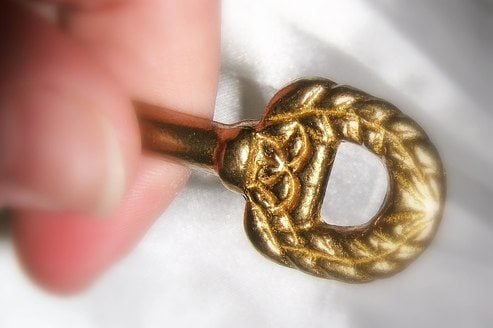
evolution of permission 300x199 May I Contact You Please? The Evolution of Permission  In the past decade of direct marketing online, the focal point has become contacting consumers through the email channel.

Email makes sense to us as marketers. It’s like direct mail, but online. We put together a piece that contains compelling marketing copy with an effective call to action, we let it fly in a campaign, analyze the resulting opens, clickthroughs, and conversions, then tune and repeat.

But ultimately early usage of email was just that – an offline marketing approach ported to the online world. With the rise of the social Web, we are starting to see our brands exposed to other ways of contacting consumers. Facebook fan pages, Twitter, Youtube channels – our brands are joining communities and starting to access channels of communication that are unique to the online medium.

But email marketing still reigns supreme. Email is still the most widely used communications technology among most demographics (with the exception of SMS among younger generations), and despite the social Web, it’s still the place where people look for direct marketing messages.

Differing opinions exist on the future of email, but I think – more than the medium – it’s more important to talk about the future of permission. After all, as a CRM, relationship, or social marketing professional you are often judged by the size of your database. It’s the true measure of channel potential. How many people have giving you the permission to contact them?

Levels of Control

Permission in email marketing is whether someone has checked the box indicating that they are willing to be contacted in the future. In Twitter, and other social networks, it’s whether someone has friended or followed you. Ultimately, permission is an act of trust from a consumer – that them allowing you control of what hits their inbox or twitterstream is something that you won’t abuse.

What the social Web has brought about is a small but significant difference in just how much control they have to give you. With email, marketers manage their own opt-outs. Despite the best efforts of faithfully CAN-SPAM compliant marketers (like you) this is often not the most clean or effective process for the recipient, thanks to some rotten apples out there. On Twitter and similar, a third party is managing the opt-out mechanism, and it happens in a very consistent, real-time way before the user’s eyes. There is less commitment in giving permission on social sites, because it can be taken away just as easily as it was granted.

Levels of Disclosure

But while the social Web often gives a consumer more control over the act of granting or revoking permission, some social sites (such as Facebook) provide the opportunity to disclose a large amount of personal information. The more a user is in the practice of disclosing, the more seriously the decision to allow permission is considered (assuming permission means access to all of that information). But because email is still most users’ primary communications system, the control issue will more than likely still trump disclosure issues. That might change, however, as social tools evolve, and the SMS-generation grows up.

Understanding Permission Behavior, and Using It

The future of permission is that it will become complex. It is likely that consumers will become more and more in control, and they will develop usage patterns on various services that make them approach permission differently. The order of “most-guarded” contact permission down to “least-guarded” might vary for different segments of people across different networking services. This will create complexity but also opportunity for marketers.

The marketer will be wise to understand the least guarded communications permission for their target audiences, work to obtain that, and advance inward as trust develops. Once a marketer has permission to contact a user anywhere, anytime, she or he must use it very carefully or face demotion. One potential approach could be to send what you know are only the most important messages to the most-guarded channel, with messages of lesser importance going to the others.

How do changes in permission impact your marketing efforts?

(photo by Micky)
pf button both May I Contact You Please? The Evolution of Permission

Thousands of People Get One Social Thing. How About You?

(our free, daily email with 1 great thing you need to know about social and content)

Genesis Theme Framework

Convince & Convert Runs on
the Genesis Framework

The Genesis Framework, which powers this site, offers a huge selection of amazing designs which can change the way your site looks. They are easy to customize and include layout options as well as custom widgets, so get Genesis now!

Post comment as twitter logo facebook logo
Sort: Newest | Oldest

RT @tweetmeme May I Contact You Please? The Evolution of Permission | Email Marketing Advice | Social Media Consultin... http://bit.ly/MUpgw

complex post. simply one unimportant where I quarrel with it. I am emailing you in detail.

complex post. simply one unimportant where I quarrel with it. I am emailing you in detail.

One more reason to make your communication relevant RT @tweetmeme May I Contact You Please? The Evolution of Permission http://bit.ly/MUpgw

RT @tweetmeme May I Contact You Please? The Evolution of Permission | Email Marketing Advice | Social Media Consultin... http://bit.ly/MUpgw

The Evolution of Permission: http://bit.ly/ALCw1

Excellent point. We like to think as email as a leading example of permission marketing, and the inbox as the center of the consumer's permission and attention. Definitely not something to be abused.

Excellent point. We like to think as email as a leading example of permission marketing, and the inbox as the center of the consumer's permission and attention. Definitely not something to be abused.

Great at last someone who understands email marketing has to change, it's used like a sledgehammer rather than a scalpel by most people. The money is no longer 'in the list' as some dinosaur marketers still preach the money is in the relationship. Build an adult adult relationship and they will keep coming back.

Great at last someone who understands email marketing has to change, it's used like a sledgehammer rather than a scalpel by most people. The money is no longer 'in the list' as some dinosaur marketers still preach the money is in the relationship. Build an adult adult relationship and they will keep coming back.

@DougWick Nice job on the guest post "The Evolution of Permission Marketing" http://twurl.nl/1jpw1s on @jaybaer's blog!

May I Contact You Please? The Evolution of Permission | Email ... http://bit.ly/CO6Yz

Really enjoyed writing a guest post for @jaybaer's blog, out today - "The Evolution of Permission Marketing" http://twurl.nl/1jpw1s

@Bill Thank you, and yes it will be pretty interesting to see how spammers are handled within these new tools - especially the ones like Twitter that are more reminiscent of email in their openness.

@Morgan Great comment, and I think you're right, the segmentation leading to "most guarded" vs. "least guarded" permissions will likely be more behavioral and less demographic. A good example of the behavioral approach is Forrester's Social Technographics, with segments based on behavior in social media. Those segments might even be interesting if you set them up against permission behavior?
.-= Doug Wick´s last blog ..The perceptions of Malcolm Gladwell and Bill Simmons =-.

Great post,
How we engage with customers is evolving, and failure to follow the rules above and you actually drive your market to your competitors.
Mark Allen Roberts

Has Social Media Changed the Nature of Permission Marketing? http://ow.ly/hDhT. Post by @dougwick (via @jaybaer)

http://ow.ly/hDhL Has Social Media Changed the Nature of Permission Marketing? Thoughtful post from @dougwick (via @jaybaer) <- great post!

Right on with your observations! The idea of identifying most and least guarded permissions is interesting, but in primary research efforts on the topic, it seems very difficult to identify this based on demographic targets. Especially when looking at younger audiences, it is truly a matter of individual preference. For example, college students are probably the most scattered in terms of the channel they prefer for communicating with corporate entities / brands.

The best approach I have heard is to focus more on preference centers. I would love to hear if you have other thoughts or approaches.

RT @tweetmeme May I Contact You Please? The Evolution of Permission | Email Marketing Advice | Social Media Consultin... http://bit.ly/MUpgw

Great post. A great perspective that I haven't seen discussed anywhere else.

I wonder if consumers will be patient enough to allow the companies that are doing it the right way to succeed.

Due to the huge recent popularity the rotten apples in the social space may define the parameters of how we relate with customers before best practices become common. Email has CAN-SPAM, but what can the social space rely on for its baseline?
.-= Bill Powell´s last blog ..Workshop: Intro to Social Media for Business =-.

RT @jaybaer http://ow.ly/hDhL Has Social Media Changed the Nature of Permission Marketing? Thoughtful post from @dougwick

RT @jaybaer http://ow.ly/hDhL Has Social Media Changed the Nature of Permission Marketing? Thoughtful post from @dougwick

@Bill Thank you, and yes it will be pretty interesting to see how spammers are handled within these new tools - especially the ones like Twitter that are more reminiscent of email in their openness.

@Morgan Great comment, and I think you're right, the segmentation leading to "most guarded" vs. "least guarded" permissions will likely be more behavioral and less demographic. A good example of the behavioral approach is Forrester's Social Technographics, with segments based on behavior in social media. Those segments might even be interesting if you set them up against permission behavior?
.-= Doug Wick´s last blog ..The perceptions of Malcolm Gladwell and Bill Simmons =-.

RT @tweetmeme May I Contact You Please? The Evolution of Permission | Email Marketing Advice | Social Media Consultin... http://bit.ly/MUpgw

Great post,
How we engage with customers is evolving, and failure to follow the rules above and you actually drive your market to your competitors.
Mark Allen Roberts

RT @fruchter May I Contact You Please? The Evolution of Permission http://ff.im/-5Swhh

May I Contact You Please? The Evolution of Permission http://twurl.nl/sakaqe

May I Contact You Please? The Evolution of Permission http://ff.im/-5Swhh

Right on with your observations! The idea of identifying most and least guarded permissions is interesting, but in primary research efforts on the topic, it seems very difficult to identify this based on demographic targets. Especially when looking at younger audiences, it is truly a matter of individual preference. For example, college students are probably the most scattered in terms of the channel they prefer for communicating with corporate entities / brands.

The best approach I have heard is to focus more on preference centers. I would love to hear if you have other thoughts or approaches.

Great post. A great perspective that I haven't seen discussed anywhere else.

I wonder if consumers will be patient enough to allow the companies that are doing it the right way to succeed.

Due to the huge recent popularity the rotten apples in the social space may define the parameters of how we relate with customers before best practices become common. Email has CAN-SPAM, but what can the social space rely on for its baseline?
.-= Bill Powell´s last blog ..Workshop: Intro to Social Media for Business =-.

Trackbacks

  1. Twitter Comment


    RT @jaybaer [link to post] Has Social Media Changed the Nature of Permission Marketing? Thoughtful post from @dougwick

    Posted using Chat Catcher

  2. Twitter Comment


    @jaybaer thx. good post from @dougwick. i think it’s less about changing, and more about marketers living up to their promises to customers

    Posted using Chat Catcher

  3. Twitter Comment


    Great post! RT @jaybaer: [link to post] Has Social Media Changed the Nature of Permission Marketing? Thoughtful post from @dougwick

    Posted using Chat Catcher

  4. Twitter Comment


    [link to post] Has Social Media Changed the Nature of Permission Marketing? Thoughtful post from @dougwick (via @jaybaer) < - great post!

    Posted using Chat Catcher

  5. Twitter Comment


    Really enjoyed writing a guest post for @jaybaer’s blog, out today – “The Evolution of Permission Marketing” [link to post]

    Posted using Chat Catcher

  6. Twitter Comment


    May I Contact You Please? The Evolution of Permission | Email … [link to post]

    Posted using Chat Catcher

  7. Twitter Comment


    @DougWick Nice job on the guest post “The Evolution of Permission Marketing” [link to post] on @jaybaer’s blog!

    Posted using Chat Catcher

  8. Twitter Comment


    RT @BobCorlett: RT @TheRealPRMan: May I Contact You Please? The Evolution of Permission | Email Marketing Advice[link to post]

    Posted using Chat Catcher

  9. Twitter Comment


    May I Contact You Please? The Evolution of Permission | Email Marketing Advice[link to post]

    Posted using Chat Catcher

  10. Twitter Comment


    RT @TheRealPRMan: May I Contact You Please? The Evolution of Permission | Email Marketing Advice[link to post]

    Posted using Chat Catcher

  11. Twitter Comment


    The Evolution of Permission: [link to post]

    Posted using Chat Catcher

  12. Twitter Comment


    One more reason to make your communication relevant RT @tweetmeme May I Contact You Please? The Evolution of Permission [link to post]

    Posted using Chat Catcher