
THE NOW REVOLUTION

Read The NOW Revolution, the best-selling book on social business from Jay Baer and Amber Naslund.

Every customer is a reporter. Every employee is in marketing. And speed matter like never before. In The NOW Revolution, you'll learn:

- How to build a culture that empowers social
- How to activate your customers and employees
- How to listen and respond to real-time opportunities
- How to manage a social media crisis
- How to effectively measure social media, including ROI

Endorsed by Seth Godin, Chris Brogan, Ann Handley, John Jantsch and dozens of other social media and social business leaders.

Available at Amazon, Barnes & Noble, Apple and in all hard cover and digital formats. Also, in audio via Audible.

Click here to get the first chapter free.

History Repeats – Facebook is the new AOL

My piece of a panel discussion on trends at SocialSlam in Knoxville, Tennessee a great event put together by my friend Mark W. Schaefer.

Starting in 1992, America Online (AOL) spent more than $300 million sending floppy disks and later CDs to U.S. households, to entice citizens to sign up for their dial-up Internet connection service.

At one point during that period, more than 50% of all CDs created in the world were for this AOL campaign, and the company spent an eye-popping 10% of lifetime customer value (LTV) on customer acquisition – $35 for each new customer worth an average of $350.

Why? Because AOL wasn’t really an “Internet Service Provider” at all. Instead, AOL created a parallel and private online experience that provided just about everything you might want or need, sanitized for your protection. You didn’t need to go to “the Web” because you had AOL News, Weather, Sports, Email (you’ve got mail), Chat, eCards, Shopping, Stocks and more at your fingertips.

AOL built an online castle by spoon feeding the “best” parts of the Internet to members wary of going it alone.

As it turns out, there’s a lot of money in the castle-building business, as Americans gladly signed on to be denizens:

  • AOL had 200,000 subscribers in 1992 when the mailings began
  • In 2002, AOL had 25 million subscribers
  • In 1992, the market capitalization of newly public AOL was $70 million
  • In 2002, AOL’s market cap was $150 billion, enough to swallow Time-Warner

History Repeats. Facebook is the New AOL

Facebook is trying to become the plumbing of the Internet, and is fighting a war for your attention on 3 fronts:

  • Facebook.com
  • The Parallel Web
  • Open Graph and Data Mining

Facebook.com

Facebook’s Castle

Facebook is pursuing their own “parallel Web” castle strategy. To whit, how many of these do you use, recognizing that perfectly good (and often better) alternatives are available across the non-Facebook portion of the Internet?

  • Facebook Events (evite)
  • Facebook Causes (various)
  • Facebook Places (foursquare)
  • Facebook Deals (groupon)
  • Facebook Credits (paypal)
  • Facebook Messages (email)
  • Facebook Mobile
    …and the soon to be announced Facebook phone (iphone)

Open Graph and Data Mining

The real insidious genius of Facebook is not Facebook.com, or even their castle strategy, it’s the Open Graph. All those “like” buttons spread across millions of sites give Facebook unprecedented data about our preferences and behaviors.

Take a look at a site such as Like Button (www.likebutton.me) for just a tiny taste of what’s possible. Why does Facebook want to collect all of this data? Who cares if you like fudge, or Tom Petty, or Sponge Bob, or those cute shorts from Swell (client)?

Every one of those seemingly trivial data points are minable. They create an increasingly rich tapestry of information about you that can (and will be) used to market to you more successfully. Facebook is already experimenting with real-time ad targeting that shows you promotions based on your status updates. So if you change your relationship status to “single” you see an ad for a chocolate cake or a bottle of Scotch (more or less). Freaky. Powerful. The future. But not. Because it’s right now.
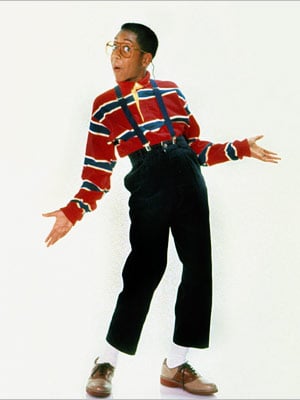
 History Repeats   Facebook is the new AOLPeople kvetch about Google and it’s online hegemony. But Google is Urkel compared to Facebook in terms of possession of data. And data = power because data = relevancy.

Imagine if when you went to Google to do a search, you saw a pop-up box that said “To search, first please enter your name; high school; relationship status; favorite movies; birthday; lists all your friends and relatives; and upload some photos of that time you were drunk and did something stupid.”

That’s essentially how Facebook works. Except we GAVE them all that information. They didn’t even have to ask.

Yes, I live and breath tools agnosticism in my social media strategy consulting. I do not want you to put all your eggs in Facebook, or any single basket. But no company in my lifetime – including AOL (who’s playbook they stole) – has so successfully infiltrated our lives like a digital tapeworm.

Is that commendable, or condemnable? I’m not sure. What do you think?

pf button both History Repeats   Facebook is the new AOL
repostus bttn lng embed History Repeats   Facebook is the new AOL
About Jay Baer

Jay Baer is a hype-free social media strategist & speaker, tequila guy, and co-author of The NOW Revolution. Jay is the founder of http://convinceandconvert.com and host of the Social Pros podcast.

Thousands of People Get One Social Thing. How About You?

(our free, daily email with 1 great thing you need to know about social and content)

Genesis Theme Framework

Convince & Convert Runs on
the Genesis Framework

The Genesis Framework, which powers this site, offers a huge selection of amazing designs which can change the way your site looks. They are easy to customize and include layout options as well as custom widgets, so get Genesis now!

Post comment as twitter logo facebook logo
Sort: Newest | Oldest
philsimon 9 pts

Interesting take, Jay. I never really thought about that. I'll have to let that stew in my head.

Hi Jay - It's funny you posted this, cause it's exactly what I have been thinking: that Facebook is a new version of AOL.

The thing that's ironic to me is that many people left AOL because they realized they were being limited from accessing the full internet (and they moved on from dial-up, where AOL was stuck, to high speed). But now people STAY with Facebook, because they feel like if they're not there, then they're being limited from accessing the full interactions of their friends, family - their social community.

I've seen people try and "quit" Facebook only to comeback, cause they missed the interactions and updates from friends, co-workers, family, etc. I've also seen someone said they read Facebook status every morning like they used to read the morning newspaper: to see what's new in the world.

I think IF Facebook ever dies out, or shrinks, it could be because some of the younger people on their are not sure how to deal with having their grandma, their Mom, school friends, and boyfriend/girlfriends - even their pastors, priests, or rabbis - all seeing the same content (updates, pics, etc.). It gets complicated and awkward to balance how they act and speak to these different groups when they all see the same thing. I think that Facebook could lose it's "cool" factor for them or the privacy they want with how they act/interact in these different social groups.

As a few have already said, boredom could be the very undoing of Facebook.

Facebook will be around for a long time. But I doubt people will continue to use it like they do now, or where they use it now.

Once it stopped being about me and my college friends, and started being about zynga, ads, brand pages, and recommendations to friend my friends' younger sisters and grandparents, Facebook lost just about all it's appeal for me; and many of my friends who'd considered themselves power users of the service. I only stick around because I absolutely love their photo sharing functionality.

The "cool crowd" leaves overly popular, commercial platforms. Especially when they see "losers" hanging in the same spot. And other people follow the cool crowd -- even the "losers" (a.k.a. late adopters). However, I assume that FB will have morphed in some way to follow these users around the web by the time this happens, regardless. But that will definitely change the relationship folks have with the FB.

I also suspect that though FB usage will wane; usage will remain high in some demographics and regions. I understand that Friendster is still the most popular social network in SE Asia; and Orkut is Brazil's most popular Social network. I wouldn't be surprised if FB remains king of the hill in the Middle East, but disappears from the daily consciousness of most Americans.

Just my 2 cents.

IMHO Facebook as all popular online networks has a great advantage over newcomers. Mainly because it has momentum. You need a large population to "Make things work" because nothing is so depressing as a friends page without friends. Being big makes that you can get away with a bit more than others, but the biggest battle FB will have to win is not of growth. They will have to improve / renew themselves over and over and over. It is the way evolution works.

This is a great piece Jay. No one company will dominate the social/ mobile web. There's another breakthrough about to happen... and another. And so on.

There is always someone out there with the vision, balls and determination to change the world. And changed it shall be. Nothing stands still, no one stays on top forever and the brightest stars of the future are yet to come. Repeat.

Cheers Jay!

Thanks Mark. The future is indeed bright. We just don't know what the source of that light will be just yet.

Man, you've got a quick draw there Jay!

Or "who" : )

I am in a hotel in South Dakota, watching hockey and dicking around with Empire Avenue. There's a reason the book is called The NOW Revolution!

This is a really great writeup. Thanks for pulling together these ideas concisely.

When social media shifts, and it will because that is human nature, Facebook will need to shift or get lost in the shuffle.

I often wonder if and when FB will go down. So many large companies rely on FB as their main source of info gathering and advertising. Nowadays if you do not have a FB page, then you almost don't exist. People look for, not your site or blog, but for your FB and Twitter page to get updated DAILY with coupons, the latest sale or latest news.

So much is riding on FB that is is scary. Even Google is scrabbling to be more like FB. A little scary? I mean, who takes on Google?

Yes, don't put all your eggs in one basket.

~Allie

http://skew.dailyskew.com/2009/09/decline-of-america-online-why-aol-sucks.html
look at what KEEPS people on FB- messaging, pics and games... as people find those elsewhere and more accessible via mobile... that is what is going to hurt FB down the line...

I think Facebook is working more like news channel as well as social website. but if a user need some information he would move towards a search engine to find.
I agree its a good way to promote your business by engaging users with different ways like having fun and providing latest update regarding your niche as well as from other world.

Very interesting. I agree though. Facebook's power is not necessarily on its own web site, but in its total reach on the Internet.

*whose playbook they stole

Hi, Jay, had to learn who Urkel was, but other than that, smooth reading. Agree with Gini Dietrich's take on Facebook's incessant issues with privacy, account settings, etc. They have a civic responsibility to be more respectful of their user base, more transparent and proactive in communicating changes in functionality.(Changes that are not always viewed by users as "upgrades," but seen as
annoyances.)

Ha! I'm aging myself with the Urkel references!

This is a really interesting observation and hopefully this does not mean that Facebook is going down (and forgotten) in the next 5 - 10 years. I mean, Facebook has shown some resilience thus far and there is just something about it that keeps users coming back from day 1.

Back then, people enjoyed Facebook's 'pokes' and 'giving gifts' features and that threw social network giant Friendster under the bus. Now people are engrossed with games and businesses are on it and it is showing no signs of stopping... or is there?

Well, I guess no one saw AOL going down or Google coming up back then, either.

There is no doubt that the internet has forever changed the world in which we live. So it can only be expected that it would change the way we sell and marketing our businesses globally. At this point privacy is the main concern in FB. If some new tool is launched people will tend to move to it.

It's true. I don't think facebook is a longterm (10 yrs +) contender because its entire business is social and pop culture. These exist in flux. People will move on and better things will come around. Facebook pushes features before they are ready and often they're "next big thing" is glitchy.

Whether they are on top or not, facebook has changed the Internet and the way people communicate. The social aspect of the web isn't going anywhere.

Jay,

Once again, another great post. A couple of observations:

1. Ease of Use: One of the reasons that AOL was so comfortable for many was the ease-of-use aspect. Run the .exe file, add some payment information, and you're "surfing", albeit in the shallow end of the Internet pool. Or, as one friend likened AOL, "Training wheels for the Internet." To show how entrenched they are, my mom and sister STILL use AOL email accounts. Facebook, while not offering email addresses, certainly falls into this category (unless you count the privacy settings crap that we constantly deal with).

2. Convenience: Not only was AOL easy to use, it was convenient. Everything under one roof, like when you stop into the Circle K on your way home from work. Sure, it's not the best selections, but it's got pretty much everything you'll need, from smokes to motor oil to shampoo to donuts. (yeah, I know, that sounds like the ingredients for a party out in Apache Junction...). Facebook has certainly excelled in this...wrapping many "off FB" utilities into a one-stop-shop.

3. It's the digital equivalent of "Cheers": All your friends were on AOL ("your" = 3rd person plural, I was never on AOL), and everybody knew your name. Same-same with Facebook. It took a little time, and unlike AOL it was "free", so it wasn't a stretch to suddenly find many, if not most, of the people within your social circle on FB. And, of course, the more who joined, the greater the critical mass at bringing aboard the reluctant (I had an FB account for a couple years, but never posted, never read it...only in the past 2 years or so have I used it). Of course, one thing people neglect remembering is that when you have a critical mass, a nuclear explosion follows.

As for your discussion of the search function, what would stop FB from partnering or licensing Google technology to do this? In the short-term, it'd be win-win for both companies since Google would capture even more traffic, and FB would capture even more metrics on what FB users are looking for. Sure, it might cost FB to do this (but I don't see that it'd be a requirement, given the upside for both), but I could easily see it paying for itself to help refine ad-targeting even further.

Interesting notion about FB partnering with Google on search. It would be quite a potent combo. I think they compete in so many other areas, however, that it would be a tough partnership, especially with facebook already doing a deal (small) with Microsoft.

Google, MSFT, whichever can get them the search engine integrated. The search company could still get revenue for click-throughs, with a small amount as a revenue-share with FB. While I didn't know about the MSFT deal, the idea was essentially not having to reinvent the wheel. Google would be good since it's the 800-lb search gorilla, but another company accomplishing the same thing might work, too. Since people would already be on FB, having search capability would be a natural extension. If FB could make it work (with whomever) I think it would be a powerful combo.

I agree with Marc-Alain that Facebook will take a dip in the next few years.

All of the articles touting how fast Facebook is growing seem to have dried up. (Obviously, it'd be hard to keep the insane pace that they had in growth.)

Also, in the past year, I've heard plenty of stories from early-adopter types about dropping Facebook not just for the typical reasons (privacy issues, FB's constant changes, etc) but because it's such a time drain for pretty low payoffs.

Back in the day, it was all about obscuring your outward identity (thus, all of the HelloKitty3282-like email addresses and profiles) and Facebook is pushing toward complete openness. I think whatever's post-Facebook will give people the flexibility to do either or even both in some contexts.

Really powerful thoughts. A lot to mull over here.

What fascinates me is the concept of capital here - social capital and financial capital. We need to be having deeper conversations about the value we are creating for Facebook - and is it worth what we get in return?

There is an illusion of "free" but the reality is, we pay for Facebook with the investment of our selves, our time, our data, and our social graph, much more than it ever cost us to subscribe to AOL. What is interesting is that we are surrendering our personal social capital to another entity who is turning that into financial capital that they keep for themselves. And maybe people are starting to realize that this is what is going on. The Huffington class action helped stir this up a little, I think, and it's a good discussion to bring into the spotlight.

We have to keep in mind that we don't get nothing for that investment. Better experience is worth something. The question is, what, exactly, is it worth?

So I think the tension is, as people become more aware of the real cost of using the service, will Facebook be able to address the WIIFM factor beyond it's just ubiquitous or easy for people to use.

Couldn't agree more.
As soon as Facebook launched their open graph, the writing was on the wall. Facebook wants to be your portal to the internet. Like AOL, they want every major function of the Internet to be performed inside of Facebook.

There is one large functionality that Facebook hasn't yet mastered... search. But give them time. They'll be releasing their own search engine soon enough. Probably a Bing based algorithm layered heavily with social/open graph data.

scary and everyone's up in arms over Apple? Sounds like Apple isn't even small potatoes to Facebook and it's impact on our private lives.

Nice post Daniel! I should have checked with you first!

Does that mean in ten years Facebook users will be considered clueless and laughable?

Hmmm. Good question. I think probably not, but I wouldn't rule it out.

This may sound ridiculous, but I think Facebook will sink over the next 3 years simply because users will become bored with it. We are quite fickle these days and our attention spans are shorter than ever. Add to that a growing awareness, concern over privacy issues and marauding competitors . I wrote a piece about it months ago:

Why Facebook Will Die:

http://lecompany.blogspot.com/2011/02/why-facebook-will-die.html

Very interesting. I hadn't thought about boredom being the undoing of Facebook, but it could happen.

i think there are some valid points in the that article but i cant help but think that the content was tailored to fit the conclusion, i know a few people, reasonably influential in their field who carry much sway with their peers who have left facebook in the last 2 or 3 years, only to join again. Facebook has huge inertia and momentum, i would say do not underestimate the power of the humans need to be part of a clan or social group, its ingrained in us.

The massive advantage facebook has, and the insurmountable barrier for wannabe's or potential competitors is its pervasiveness, its everywhere a huge amount of people probably account for most of their mobile device usage on a facebook app of some sort, think of the huge advantages, i want to let people see the cool thing my son did on his 6th birthday but i dont want to force it down their throats by emailing it to them (which they would probably find odd, in some cases) i just snap a shot on my iPhone and its uploaded in less than a minute, anyone checking their news feed will see it, i'll get a few likes, reciprocating how i value facebook.

Then there are the adapted usages of some of the features of facebook, i visit my local bar a couple times a week, i could SMS everyone saying "hey guys im here" or do what i do now, i just check-in, its less formal. I think the power of facebook is how it appears to be passive, i'm not point to point communicating requiring a direct acknowledgment from everyone of my friends that "hey cool thanks for letting me know you are at the bar for the 40th time this year" its more that i place that information there, and people can see it as a non-direct piece of information. No one has to acknowledge it and, more importantly, if they do acknowledge it they aren't commiting themselves to a direct acknowledgement to me, they are simply saying, "hey Matt's at the bar, that's cool" and i know that others can see this acknowledgement. i think some may get bored with facebook but there are other powerful social forces at work on there, just look at the figures for people leaving and then coming back, its another dimension of society, i guess the death of facebook would be when people realise a different and more fulfilling way to exist in a virtual society, if they get bored, it doesnt mean they dont care...

Not sure I agree on it dying, at least because of boredom. I see Facebook less as a content provider, and more as a social connector. People go there primarily for the connecting, and right now they are doing it better than anyone, as we have the ability to build and maintain relationships.

The content and apps are peripheral to that, and in many ways some of them, particularly events and the ability to share, enhance the social aspect of the platform.

If it dies because of boredom, that means we are bored with connecting with others. I don't see that happening.

i agree with you ... Facebook is just like the popular bar or restaurant - something more hip will come along and everyone will migrate there.

"Facebook is for old people," so says my nephew. So yes it could fade into AOL status.

I can see boredom being an issue...if FB becomes boring. Once the allure of staying in touch with friends and acquaintances, or playing the latest *.ville game wears off, then folks may begin looking for the next big thing.

But I am unsure that it will be anytime soon. MySpace, frankly, sucked. The software/site was buggy, it slowed down every computer I ever tried it on, and was filled with idiotic gangbangers who acted like 12 year-olds (No offense to those here who are actually 12).

What differentiated the two, IMO, was the tone set by the company. FB has always been "more mature", and even with the influx of the younger crowd, the attitude and feeling here are diametrically opposed to the teen/angst/music focus of MySpace. That FB has increase functionality over MS only helps make it that much better than MS.

If FB has an Achilles heel, it's making The Privacy Thing a continuously moving target. Nobody seems to know, from one minute to the next, what Facebook will decide to do in the way of privacy issues. And while they certainly lose lots of people over it, they appear to be gaining more than they're losing. That's going to be a tough nut for a competitor to crack.

Will there be a competitor to FB? Yes. Will it succeed? Maybe. It'll be easier if FB steps on its own crank, but it won't be "easy" in the slightest.

I actually think Facebook will die, too, but because of the opt-out, careless nature of their programming. People are already getting tired of the no privacy (even though they're the ones putting the information out there) and are looking for more secure networks where they can truly share their lives without fear of it being used without their knowledge. It's hard to believe it will never exist, but we thought the same about AOL..and who would have ever imagined Google getting beat by anyone or anything?

One huge difference: AOL was never considered a company stacked with the best and brightest. Facebook is similar to AOL in terms of metrics & what they are achieving, but with Google's talent.

Hmmm. I'm not sure I totally agree with that, but there's no question that the talent in today's tech world is a bit more oligarchical in terms of where it coalesces.

Where else is the greatest tech talent in the world? Arguably it was with the finance quants a few years ago. But in the tech world, it once coalesced at Microsoft, then went to Google, and is now at Facebook.

Another great post, Jay. What's REALLY amazing is that they've achieved this impact and yet have still barely scratched the surface of their potential with Baby Boomers and the corporate world.

Exactly. They really haven't made much progress with people that have REAL money.

Jay,

You struck a chord with me with the AOL references.

Another interesting point to consider is the aspect of customer retention and service. Facebook has zero live support and every aspect of their service is designed to be ran by scripts. AOL however had a significant cost (as well as financial interest) in providing live help and support to customers around the clock. This greatly helped with keeping users active and mending service/brand issues (but it also has ignite them).

AOL's main source of revenue since '95 was not from subscriptions. It was specific co-branded business development deals and advertising. A stat that was thrown around was on average, AOL would generate $70/monthly per account from advertising alone. Toss in another $23.90 and you are just swimming in cash. But relevancy was key and that was the demise of AOL.

Anyhow, there's a lot more to discuss on this. Perhaps the fact that Facebook now sees what people do, what people think, where they go and other psychographics of their online behavior. AOL pioneered this, Facebook is carrying it forward.

Will it stay? Will it go? I think it'll stay for the next five years but relevance may fade. People like to try new things and new experiences on the web. Remember MySpace?

Great article, Jay - keep it up! :)

Not only do I remember MySpace, my post from Monday reminded me that they still have twice as many active users as Twitter. Scary.

Emphasis on "Active." Agree - Twitter is a great example of features v. benefits. Most people know what Twitter is, but don't see the actual benefits from using it. They still equal it to recreational versus a legitimate way to communicate with one another.

MySpace has retooled themselves to service 'for everyone' to a niche social network in the emerging artist/music genre. I think it's working because even though ALL my peers have stopped using MySpace, their numbers still peg them as a strong player in the social space.

Great post.

How much of the data that Facebook is gathering about us is truly useful in the long run? Liking something on Facebook is becoming so easy that I don't necessarily believe that "Liking" something really means you like it.

For example, a friend asks me to "Like" his clothing company that sells blue t-shirts on Facebook. He provides me the link and it is easy enough so I help a friend out. I don't really like his clothing line or blue t-shirts and would never buy anything from his store or even from a company selling blue t-shirts.

Was my "Like" really worth anything to Facebook? It was worth something to my friend because it helped him increase his "Likes" but as far as mining data about me, Facebook has basically mined misinformation. In theory they will now start serving me with blue t-shirt ads which I will ignore.

Wouldn't it be more valuable if a "Like" took some effort? Facebook could really gather useful information about me as a consumer if I had to actually put in a little bit of effort to "Like" something. This would prevent me from basically throwing away "Likes" on things I really had no interest in.

Of course, the number of "Likes" would go down but the actually people liking things could potentially be served more relevant ads.

Great comment Alex. No question the "like" is much more of a digital bumper sticker than a blood oath. But when you add up all of our granular behaviors, it creates a latticework that can be successfully mined in many cases. Individual behaviors typically don't mean much, which is why when you rate just a couple of movies on NetFlix, you get crazy recommendations. But over time, your behavioral patterns - even inadvertent ones - paint a picture that can be utilized for targeting.

Operationally, I agree we'd be better off if we had a two-tier system on Facebook: "like" and something deeper. A "love" button (or some such) that would force updates from that person/brand into the Top News portion of our news feed, etc. Hmmm. I think I'm going to write about that.

2010 was a like-a-nanza in millions to random pages and stupid sayings on like-script pages. That doesnt work to the same extend now.

Why?
Users tend to learn not to like random crap... Including liking to do a favour. I instruct businesses not ask for like-favours cause it has no marketing value... That will asumably become standard knowledge as well.