Posts Tagged ‘conversion rate’

4 Critical Steps for Marketing in a Recession (video)

Thursday, December 11th, 2008

Greetings. I’ve put together another video blog post, this time on a subject that’s on everyone’s mind: How to Market in a Recession. Do you believe?

Similar Posts That You Might Enjoy

Welcome. If you liked that, there's plenty more. Please subscribe to my RSS feed. You can also find me on Twitter @jaybaer

Jason Baer

Bloggers: Who Is In Your Fab Five?

Monday, October 20th, 2008

Thanks to Jason Falls for the inspiration (okay, it’s a straight rip-off) for this post. Jason pointed out five lesser-known bloggers that he reads regularly (including Convince & Convert). His post seems to have triggered an a-ha moment, as several other excellent social media bloggers including Mack Collier and Amber Naslund have posted similar lists of people to read. 

This is truly the genius of the World Wide Web. A hyper-linked community that enables users to find interesting and useful content based on the recommendations of real people, enabled (but not driven by) technology. 

Here’s my Fab Five bloggers. People I read that may be less well-known by Convince & Convert readers. Also, because I work in email marketing and digital marketing in addition to social media, my list is not purely social media focused, as are those cited above. 

Tamara Gielen

Tamara’s blog BeRelevant is dedicated to B2B email marketing best practices. Tamara doesn’t post a ton of her own content, but her ability to cull down the huge output of blog content about the email industry, and include only what’s legitimate and groundbreaking on her own site is a godsend. 

Tamara is also the founder of the Email Marketers Club, a social network for professional emailers with more than 1,700 members. By day, Tamara is the Director of Email and Digital Dialogue for OgilvyOne. She lives in Belgium, and can be found on Twitter @tamaragielen 

Bryan Eisenberg

One of the few folks out there who have been in digital marketing as long as me, Eisenberg is a conference staple (especially search conferences). His insights into customer experience, usability, information architecture, and conversion rate optimization are simply unparalleled. If you need to get more results from your Web site, he’s a guy to follow.

His blog Grokdotcom is more of a company-wide production now, but still brimming with insights. Watch for his regular series of books too. His new one, “Call to Action” is outstanding, and “Waiting for Your Cat to Bark” is required reading for all Web designers, project managers, and information architects I hire. 

He’s on Twitter @theGrok

Dan Zarrella

A great blogger with no shortage of opinions about social media, search, and cross-linking. Not afraid to rock the boat, Dan Zarrella brings serious science to the discussion of social media and viral marketing. He believes that “going viral” is no accident, and I believe he’s the number one guy to watch in terms of the emerging confluence between blogging, other forms of social media, and SEO.

He’s got some very useful tools for maximizing the search and viral friendliness of your blog. Check them out in his Tools section. 

Dan is on Twitter @danzarrella

Michael Gass

I do a lot of work for ad agencies and PR firms, and Michael Gass’ blog Fuel Lines is redefining how agencies think about business development. A great example of a blogger picking a distinct topic and absolutely owning it, Michael eats his own dog food (and the food of other dogs as well). You see, his consulting business is based on helping agencies use smart blogging, SEO, and social media to generate inbound leads - rather than shooting in the dark making cold calls.

In addition to regular, insightful posts about the future of ad agencies, Michael has added a ton of value to his blog with a sweeping survey of the agency biz dev landscape, and a “best agency blog” competition.

Michael has been a huge help and a great friend to Convince & Convert. If you’re at an agency (and even if you’re not), read his stuff. He’s on Twitter @michaelgass

Jason Falls

Yeah, he put me in his five. But, I would have had him in here regardless. With the tsunami of blog posts, opinions, pass-alongs, retweets, and me-toos out there, Jason Falls maintains an exceptionally high quality level. If he says something on his blog - Social Media Explorer, it’s worth reading. If he sends a tweet, the link is worth clicking.

Unlike many (most?) social media consultants, Jason is actually a practitioner of the art. His work for Jim Beam via his agency Doe Anderson is one of the legendary examples of social media press releases and integrated microsites. His blog isn’t about what social media will become, it’s about what social media is now, and how to do it right. 

Jason is a straight shooter that’s not caught up in his own emerging Web fame, and among the top tier of social media and PR 2.0 “names” I find him to be the most dedicated to sharing and extremely giving with his time. He was an early champion of Convince & Convert, and I’ll never forget that. (Chris Brogan is another one that’s amazingly cool to lesser known folks, despite his insane schedule and content generation volume). 

Jason is a must-follow on Twitter @jasonfalls

Who Are Your Fab Five? Leave Them in the Comments, Or Write Your Own Post

 Similar Posts That You Might Enjoy

Jason Baer

Agencies Need to be Testing Landing Pages

Monday, July 21st, 2008

Average length of stay on a Web site is approximately 2 minutes and 30 seconds overall. Approximate length of stay by visitors coming from search is about 10 seconds. Why the difference? Search users are less likely to know your company and its attributes in advance, and they know there are several other options available to them simply by clicking “back”. In short, search engine users have the attention span of a 4 year-old after three s’mores and a cup of grape Kool-Aid. 

Most marketers engaged in even semi-serious pay per click programs have determined that creating specific “landing pages” to sync with particular search terms can help combat the flighty nature of search users. If a user searches for “mustard” on Google and clicks on your ad, you don’t take them to your home page, you take them to a page that’s all about mustard. You don’t even mention ketchup. Why confuse the user with information that doesn’t specifically address their needs?

This ability to determine the specific interests of the consumer (via their search phrase) and give them marketing messages that match is perhaps the most powerful capability of the Web as a whole. It’s as if consumers are walking around with thought bubbles over their heads describing what they want to buy. 

Not to be ignored is the important fact that Google (and I presume Yahoo!) are now including the content (and download speed) of landing pages as components in the “quality score” that determines where your PPC ad appears in search results. Meaning, if the page that lies behind your Google ad is not uber-relevant to the query, your ad will be penalized for it. This makes creating great landing pages a necessity, not a luxury. 

For agencies, the creation of landing pages is a critically important service that is not often being offered to clients with the appropriate voracity. If the client is thinking about a Web site redesign, but isn’t ready or doesn’t have the budget, creating a series of outstanding landing pages can help the agency prove its Web design mettle. Further, if a variety of messaging and/or design approaches are being considered for the new Web site, testing the efficacy of those approaches on landing pages is a smart move. 

Because they lie directly in the consumers’ research and purchase funnel, landing pages provide extraordinarily useful data that can be extrapolated for use in other online and offline marketing programs. Offer testing, photo testing, price point testing. All of these can be accomplished with landing pages with relative ease.

In fact, a rigorous and ongoing program that tests new landing page components (including multi-variate testing) can have tremendous bottom-line impact for clients, and makes the agency a hero. A multi-variate test that we conducted at Mighty Interactive for a student loan company generated a 40%+ increase in leads - resulting in a financial gain of hundreds of thousands of dollars for the client. 

When testing landing pages (and really any digital marketing element), remember that small changes can make a big difference. Background colors, font, spacing, photos, headlines and more can all impact whether a consumer will buy now or buy never. Don’t overlook button labels, either. Your action button is the last thing the consumer reads before determining whether to take action. Labeling it “submit” or something equally uninspired is missing a tremendous opportunity to set the hook at a critical time. 

If you have a landing page testing success story, let’s hear about it. 


 Similar Posts That You Might Enjoy

Jason Baer

Google’s Popularity is Costing You Money

Monday, June 30th, 2008

Paid search management vendor Covario said today that PPC spending was up 52% in Q1 2008 versus 2007.

52% is a big leap for an already red-hot digital marketing tactic.

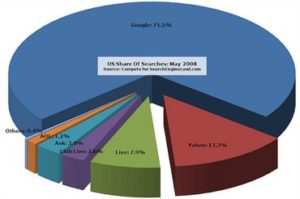
But perhaps more interesting was the finding that Google took in 85% of the paid search spend in the first quarter. (No wonder Yahoo! rushed into their arms after Microsoft blew them off). This points to a big inefficiency in PPC in general. If Google has 71% of the search market based on total number of searches, but 85% of the PPC budget, then substantially more people are spending substantially more dollars in Google than necessary.

Google’s Popularity Means You’re Overpaying

It’s not a mystery why paid search is up 52% and Google has 14% more spend share than eyeball share. In a down economy, marketers want to minimize waste, and Google PPC is the closest thing to a sure bet that’s easily available. (see previous post on digital marketing’s prominence in a recession). Marketers figure that if they have to retrench and focus on results and ROI, Google’s the place to go. But, if everyone is thinking that (and it appears they are), then the price for a click on Google PPC will continue to rise quickly to the point that profitability and ROI are impacted.

I suggest monitoring your average cost per click carefully to see if this trend is impacting you or your clients.

Don’t Dismiss Yahoo!

On a related note, this 85% Google share very much undervalues the importance of Yahoo! to many successful PPC programs. In many cases while working on client projects with Mighty Interactive, we saw Yahoo actually outperform Google. This is especially true for certain brands, as Yahoo’s users skew more female and less technical than do Google’s (and MSN’s users are even more female than Yahoo).

So, if the Google gold rush is pricing you out of the market, swim upstream and put some dollars in Yahoo and MSN where the clicks are cheap and your competition has fled. Similar Posts That You Might Enjoy

Jason Baer

How to avoid the 3 critical mistakes of online advertising

Monday, January 15th, 2007

$15.9 billion. That’s what eMarketer projected was spent on U.S. online advertising in 2006. For a dose of perspective, that’s more than was spent on local radio ads, cable TV ads, billboards, and B-to-B Magazines like Solid Waste & Recycling.  In truth, online advertising trails only network television, local newspapers, and consumer magazines in total ad dollars spent.

What this means is that unless you run a Mennonite supply company, if you didn’t advertise online last year, chances are good that you’ll do so in 2007.

When you get into the online ad game, it’s important to realize that while it can work wonders, it’s not immune to the laws of marketing. Online ad campaigns can and do suck, and when they do it’s typically because one of the three critical mistakes was made. Let’s see if we can avoid that tragic scenario.

No Call to Action

People don’t want to click on your ad. The fact is, if the viewer wanted to be on your Web site, she would be there already. Instead, she is on some other Web site, and your challenge as a marketer is to get her to stop what she has chosen to do, and pay attention to your message.

And attention isn’t usually enough. What you really want is for the viewer to actually click on your ad. The critical mistake is to not explain the specific benefit of clicking. To get a person to instantly shift from their planned behavior to an unplanned behavior solely through the power of suggestion is not easy. Before you sell your services, you first have to sell the click.

Make sure all of your online ads have a distinct and concise call to action, and wherever possible keep the call to action present throughout the ad (don’t just show it on the fourth panel of the animation). Show your proposed ads to friends. Ask them to describe the benefit of clicking in five words or less. If they can’t, get back to work on your call to action.

No Post-Click Plan

Once someone clicks on your ad, you’ve won the battle but not the war. Don’t hang the “Mission Accomplished” banner in your office just yet. Far too many online advertisers still send clickers straight to the home page or some other generic place.

For maximum effect, send clickers to a special landing page or microsite that ties directly to the banner, with the same look and feel, messaging and offers. Remember that online advertising is a series of steps with the banner being first, and the click being second. Don’t overlook the third step which is driving clickers to act through a clear and persuasive post-click experience.

To this end, you should also distinctly measure post-click behavior using a Web analytics package. Since a click by itself doesn’t make you any money, make sure you’re measuring how many of those clicks translate into sales, leads, calls, etc.

No Creative Testing

One of the reasons for the explosive growth of online advertising is its easy measurability. It’s simple to determine how frequently a banner ad is clicked upon (the click-through rate) and to not use that critical information to improve your results is like signing a top free agent running back but keeping the same bad offensive line…

Like Britney Spears offspring, once you have one banner ad, it’s comparatively easy to create another. Consequently, when making online ads don’t make just one. Build three to five ads each with variations of graphics, offer, call to action and other factors.

Run all of your ads in rotation and carefully monitor the results. If one or more ads disproportionately yields more clicks than the others, ask your ad sales representative to allocate the impressions solely to the best performers. Even small changes can have a meaningful impact on click-through rate.

Also, if time and budget permits, test “rich media” versions of your ads. “Rich media” includes all the new-fangled ad formats like Flash, Pointroll, video ads and audio ads. Basically, any online ads like feature video, audio, complex animation, or fly across your screen are categorized as rich media.

While these ads can be a bit bothersome, one man’s annoying is another man’s successful ad campaign. Rich media ads are becoming more and more numerous because they work. A recent campaign for one of our clients tested traditional animated online ads against rich media versions, with the rich media ads delivering approximately 400% more clicks.

These days, the Internet is a lot like Hollywood in its mentality of conformity. I’ve taken my kids to at least a dozen movies about some form of animated creature in the past year. It’ll be “The Adventures of Lichen” soon if execs just keep playing follow the leader.

Go against the grain and try a rich media campaign. See www.pointroll.com for a good library of samples.

Riding the wave of Internet advertising growth is exhilarating, and it’s rewarding to see clients have success with this emerging medium. But the worst fate that could befall the industry is for first-time online advertisers to fail and lose faith in this unique and effective marketing tactic.Similar Posts That You Might Enjoy

Jason Baer

Simple techniques for making Web site visitors take action

Saturday, October 28th, 2006

Making the Horses Drink

The Web is the most comprehensively flawed world-changing technology ever. The ways in which you can screw up a Web site are without limit. In contrast, it’s a lot tougher to botch a fire, a wheel, a toilet, an ATM, or one of those KFC chicken/potato/corn/cheese bowls.

Like a really big Science Fair project, the Web sprouted organically and without profit motive. There wasn’t anybody in charge, there were only very loose rules, and Web site makers were left to their own devices – a hippie commune with mouse pads and tons of Mountain Dew.

The result of the Web’s socialist upbringing is that its core premise – accessing information – lacks standards. Imagine if every time you picked up a book the page numbering system was different. Some What if your cable TV only used prime numbers? Or if your radio would only tune to Pi? That’s the scenario we’re stuck with online. Every Web site requires each visitor to assess and learn its specific navigation schema.

It’s a tall order and it’s the reason why such a small percentage of Web site visitors do what we want them to do online. The percentage of Web site visitors that make a purchase on e-commerce sites (the “conversion rate”) is just over three percent. 97 out of 100 Web site visitors leaves empty-handed. Yikes.

But there are ways to help your Web site visitors understand your structure and lead them to a satisfying destination – hopefully an online order, lead, or other ROI-generating behavior.

People are People

Most of the visitors to your Web site will come occasionally and perhaps only once or twice. They do not understand the nuances and intricacies of your business, your corporate structure, or your product line. So don’t organize your site that way. If they can’t fathom the definition of a navigation label, they’re not likely to click on it. Name all navigational elements using language that your mother uses, not your customers – and certainly not your employees. Make it your mission to hunt down and kill all Byzantine abbreviations and insider jargon in the navigation – and if you have the stomach for it, site-wide.

Navigational Democracy

Ultimately, the users of your Web site will tell you what is the most important content on the site, and thus how the site itself should be organized. Examine the usage statistics for your Web site and determine the pages that are most frequently accessed and that have the longest duration of stay – indicating visitor interest in the content. Rework your site so that those pages are part of your main navigation, not two or three levels down. The behavior of your visitors demonstrates how to organize your information for maximum ease of use. If its too jarring to change your main navigation in this way, add a Quick Links box to the top right corner of every page and include in it direct links to every popular page within your site.

Lend a Hand

Most sites are buffets of information. Plenty of content, but with no real thought given to selection, sequence, or relationships between components. You develop a bunch of Web pages, organize them in a seemingly logical fashion, and let visitors decide what they want to read and in what order. That type of freedom can produce troubling outcomes, the informational equivalent of eating 4 helpings of chocolate mousse, followed by 63 coconut shrimp.

Instead, think of your site as a chef’s tasting menu. Instead of just letting the patrons go wild on your content, give it to them in measured portions in a sequence that will maximize their satisfaction.

Determine in what order you ideally would like your site visitors to access specific pieces of content on your site to move them from interest to action. Then modify every page of your site so that it either guides the visitor along that path (from step 2 to step 3), or if it’s a page that isn’t in the key persuasion process, points the visitor into that funnel.

This is not difficult, and can be accomplished by adding links at the bottom of your pages that guide the visitor to the next logical page. Even the addition of “next” buttons on the bottom of each page have been proven to improve conversion rates by helping visitors get to the information they need to make a decision.

Play Master and Servant

Especially on popular and critical decision-making pages of your site (but ideally on all pages), don’t be shy about telling the user what to do if they are ready to buy. It’s okay to ask for the order.

Your action buttons (call now, free estimate, request information, add to cart, et al) need to be big and compelling. Ideally, they should be the most visually arresting item on the page, using the “hottest” colors so that visitors’ eyes will land on them when they scan the page. Visitors need to know how to take action. Don’t be shy.

A recent study found that placing a small graphic of animated human eyes that “look” toward the key action button can increase response rates.

The animated eyes trick is about Wayne Newton on the cheesy scale, so that might be over the line. But, getting people to your Web site costs you something every time. Following these techniques will make your site easier-to-use and will transform more of those visitors to buyers.Similar Posts That You Might Enjoy

Jason Baer

Just What They’re Looking For: Using Landing Pages to Improve Paid Search Marketing

Thursday, December 15th, 2005

As I write this, hundreds of thousands of businesses are competing to convince people that their Web site is online nirvana – the beatitude, not the band.

But, given all the other marketing tactics available, why has pay per click search marketing gone from nowhere to a $3 billion dollar industry this year, and $5.5 billion by 2009 (according to Jupiter Research)? What makes search so special? It works like a Sheriff Joe chain gang.

You’re fishing where the fish are. If someone takes the time to go to Google and search for “online horse classifieds” it’s a near certainty that person is interested in buying or selling a horse.

Search marketing is hardly a secret anymore, however, and with the flood of new competition for even the most bizarre search phrase (“phoenix coffin sales” has four paid advertisers on Google), search marketing success requires more than a credit card and a pulse these days.

There are many figurative dials to twist to improve your paid search marketing campaign: search term selection, ad copy, bid strategy, etc. Each of these alone or in combination can impact your pay per click results. But these pre-click adjustments are a relatively minor component of your success when compared to post-click factors.

The typical Web site visitor spends a little less than three minutes on a site. The typical Web site visitor coming from paid search spends approximately 20 seconds. This means that the prospects you’re paying Google to bring to your site on a pay per click basis have the attention span of a preschooler after a box of Twinkies and a Kool-Aid chaser. Search engine users know that there are many more links ostensibly about the same subject waiting for them as soon as they click the back button to return to the search results. Consequently, they won’t spend much time surfing around your site.

To overcome this attention deficit problem, don’t send visitors from paid search to your home page or any type of general page on your site. The page that prospects are sent to after clicking a link is called the “landing page” and specificity is the key component. Always send visitors to the most specifically appropriate page that directly addresses their search query.

For example, if you’re bidding on the search term “Etnies blue skateboard shoes” don’t send visitors to your home page. Don’t send them to your main shoes page. Don’t even send them to the Etnies brand page. Send them to a page that is exactly what they have already said (via their search query) they are looking for: Etnies blue skateboard shoes.

Avoid the urge to clutter up your landing pages with different products, messages, offers, and other seemingly informative flourishes. Doing so is the equivalent of the drive-through employee asking me if I want a hot apple or cherry pie with my burger. If I wanted a pie, I would have ordered a pie. Similarly, if I wanted an Etnies T-shirt, I would have searched for an Etnies T-shirt. I want shoes, and as a site owner you’ve got 20 seconds to convince me you’ve got precisely the shoes for which I’m searching.

Of course, many sites do not have existing pages that are of a singular purpose that could be used as landing pages. Here are the critical elements to creating high performance landing pages from scratch:

1. Immediately convince the visitor that you have what they need. If the search phrase is “Phoenix Coffin Sales” make sure the landing page has a prominent headline including that phrase.

2. Include a prominent call to action. The goal of a good landing page is to get the lead, sale, phone call, etc. immediately, without the prospect leaving the landing page.

3. Hold their hand. You’re asking a prospect to quit researching and commit now. Provide testimonials, guarantees and other content on the landing page that reduces perceived risk.

The concept of landing pages may seem Machiavellian, but it’s evolutionary marketing. It would work offline, too, if such a thing were possible. If I was in the market for a brown corduroy jacket (hint, hint) and I could go to the Brown Corduroy Jacket Store without the annoying distractions of passé black jackets, socks, belts and their ilk, the chances I’d walk out with a jacket and an Amex receipt would be pretty high, indeed.

So, faced with increasing competition, spend your resources to customize the post-click experience of your prospects, and you’ll take your paid search program to the next level of success. Similar Posts That You Might Enjoy

Jason Baer

Botox For Your Web Site

Wednesday, June 1st, 2005

Make these changes now to improve online results

Thousands of Web sites built circa 2000-2002 are showing signs of wear and fatigue like a dot com Larry King. Today’s trend is away from flashy, narcissistic pandemics about why YOUR bolt and fastener company is the BEST, and toward obvious, easy-to-use, functional Web sites that respect the time and intelligence of their users.

You may not have the budget (or the moxie) to take your current site out back, pull an Old Yeller, and start fresh. Hence, this set of important changes you can make to eliminate small Web site lines and wrinkles, and return a fresh, healthy glow.

Focus on the User

Nobody comes to a Web site on accident. Each visitor needs something from you. The key to online success is figuring out what those needs are, and answering them as quickly as possible. Think of your site as an extension of your customer service department rather than your marketing department, and you’re on the right track.

How do you know what the needs of your audience are? Ask them. Put together an easy online survey using www.zoomerang.com or a similar tool, and invite visitors to participate. Include a question that requires survey takers to describe (or select from options) precisely why they came to the site. Use that information to reconfigure your site’s organization and content.

Once you have an understanding of what people want from you, determine how best to provide it. Create a chart of all the pages on your Web site. Does this page answer one of the primary five to seven visitor questions? If not, does this page clearly direct the visitor to another page that answers a question? If not, delete the page from your site. Your top seven visitor questions should be answerable in two clicks from the home page.

Have a Clear Home Page

The home page of your site has two purposes. Briefly describe who you are so visitors know they are in the appropriate place, and direct users to an inside page most likely to answer their question.

Do not use your home page to try to tell your whole story, and unless you are managing a Web site for a rock band, porn star, or art gallery do not put a flash introduction on your site. 93% of Internet users click that convenient “skip intro” button, so having your logo burst into flames accompanied by the first seven bars of “We Are the Champions” isn’t exactly money well spent.

Remember that many people will be seeing your site for the very first time, and thus need to evaluate each link on your home page before determining their next action. Ideally, provide 15 or fewer next click options.

Write Copy for the Web

People don’t read online, they skim. Eyeballs jump around a Web page like Tom Cruise on Oprah.

So, don’t repurpose your brochures. Instead, determine what the goal of the Web page will be, and then write it in an inverted, journalistic style. Conclusion first, then more details

Use a lot of subheads and bullet points to give the visitor’s eyes a roadmap to what’s important on the page. Keep sentences short and punchy.

Keep Score

The Internet is the most measurable medium yet devised, and features actual, honest-to-goodness counting of each person that comes to your site. It’s imperative that you use this data to consistently measure the effectiveness of your site, and make changes based on your findings.

Decide what behavior you want your Web site visitors to engage in on your site
. Filling out your lead form? Calling your toll-free number? Downloading your white paper? Purchasing your product?

Whichever it is, use a Web analytics program (we recommend Clicktracks and Urchin on Demand (recently bought by Google)) to determine at least monthly how many of your visitors did in fact do what you want them to do on your site, and more importantly, your conversion rate.

To determine your conversion rate, divide the number of desired actions by the number of people who visited your site. If 100,000 people visited your site last month, and 1,000 of them filled out your lead form, your conversion rate is 1%.

This is the magic number online because it tells you how effective your site is at aligning what you want people to do with what they want from you.

If you want your site to generate a larger number of desired actions there are only two ways to do so. You can ignore the shortcomings of your site and get more people to visit – which can be a difficult proposition. Or, you can inject a little botox into your site, make it customer-friendly, and get more results from the people already there.Similar Posts That You Might Enjoy

Jason Baer

Actions not Words: Most web sites can’t get visitors to do much of anything. How about yours?

Wednesday, September 1st, 2004

In comparison to their human counterparts, Web sites have certain advantages as sales representatives for your company. They work 24×7, don’t complain about the commission structure, and don’t expense $273 for dinner with “Paul” the imaginary new business prospect. But otherwise, Web sites are generally terrible salespeople.

Nearly all Web sites have (or should have) visitor action as a central goal. Whether that action is a purchase, filling out a lead form, signing up for an email newsletter, or a combination of these or other activities, enticing visitors to ACT not just READ, is the end game of online marketing – and one at which most sites consistently fail.

The percentage of your site’s total visitors that actually take a desired action during their visit is called the site’s conversion rate, and a multitude of Internet research pegs average conversion rates at 2-5%.

Just imagine what would happen if your sales force closed only 2% of the calls they made. In most companies, a close ratio in that neighborhood would result in a humiliating verbal flogging at an early morning sales meeting, followed closely by a strong hint manifesting itself in the form of a $5 off coupon to Harriet’s House of Resume Polishing.

Even more damning is the fact that the people visiting your Web site are there for a reason. By their very presence, they have indicated their interest in your product or service. They didn’t enter a random set of characters into their browser to see what might happen. Consequently, your Web site’s pool of prospects might actually be MORE pre-qualified than your sales team’s. So what gives? Why can’t most sites close more than 5% of their prospects?

There are three primary culprits.

First, despite the excessive use of hair products and occasional personality disorders, professional salespeople have one critical skill that most Web sites lack entirely – listening. In a conversation with a prospect, salespeople are trained to listen to what the prospect says and probe for need. Only when needs have been identified do well trained salespeople offer solutions to meet them.

Web sites are often exactly the opposite. The entire “conversation” is not a conversation at all, but a monologue. “This is what our company does. These are the services we offer. These are the benefits of those services.” No acknowledgement of customer need. People act because they have a problem or need, and believe you can solve it. Frame the issue from their perspective, and you’ll be able to more succinctly and directly explain why you’re the solution.

The second problem is that Web site owners dramatically overestimate depth of visit. A March, 2004 study of thousands of sites from Web site analytics company Onestat.com found that more than 80% of all Web site visitors view three pages or fewer. This has massive implications for home page design and content organization. To increase conversion rates it’s imperative that your site diagnose visitor need, deliver evidence of being able to meet that need, and encourage action within the first two pages. Don’t waste your most valuable real estate – your home page – by including on it a worthless animated sequence or other corporate welcome statement that doesn’t address need or encourage action.

If the primary objective of your site is to get people to request your free brochure about your new weed killing spray, include a large button on your home page that says “Overrun by weeds? A weed-free yard is within your reach. Click here to see how your weeds could be singing the blues by this weekend.” Corny? Yes. Effective in getting prospects to request the brochure? Yes.

The third problem is a fundamental lack of understanding that unlike in-laws and Supreme Court Justices, you’re not stuck with your conversion rate. Now that Internet advertising is hot again, companies are constantly looking for ways to increase their Web site traffic, not realizing that the least expensive way to improve results is to re-architect the site itself to boost conversion rates. If you better your conversion rate by 100% – a very achievable objective in many scenarios – you’ve effectively doubled your marketing budget.

Certainly, there are principles that are universally true, including those included here. However, when you’re ready to get serious about conversion rate improvement, the only way to do so is to test your theories. Work with your team or a consultant to create several versions of your home page. Try new navigation labels. Build multiple lead generation forms. The only way to truly optimize results is to test until you’ve found the Web site recipe that makes the tastiest casserole for your company.

Is it easy to optimize conversion rates? It’s not too difficult to improve them by ridding your site of obvious problems. But a complete optimization strategy and tactical plan can indeed be tricky. But, unless you have a large unused cubicle farm and a platinum account at monster.com, it’s a lot simpler to test new Web site options than to try a fleet of new salespeople.Similar Posts That You Might Enjoy

Jason Baer