
One of the questions we get asked most often at Convince & Convert is how to create a content marketing strategy and plan. Some people assume we’re holding onto special tricks or the ever-elusive yet way-over-hyped “content marketing secret sauce.”
The truth is there are no secrets to creating a content marketing strategy. Instead, we simply use our proven, 7-step framework as a guide, plus add plenty of meaningful time and effort (usually about 60 days or so for us).
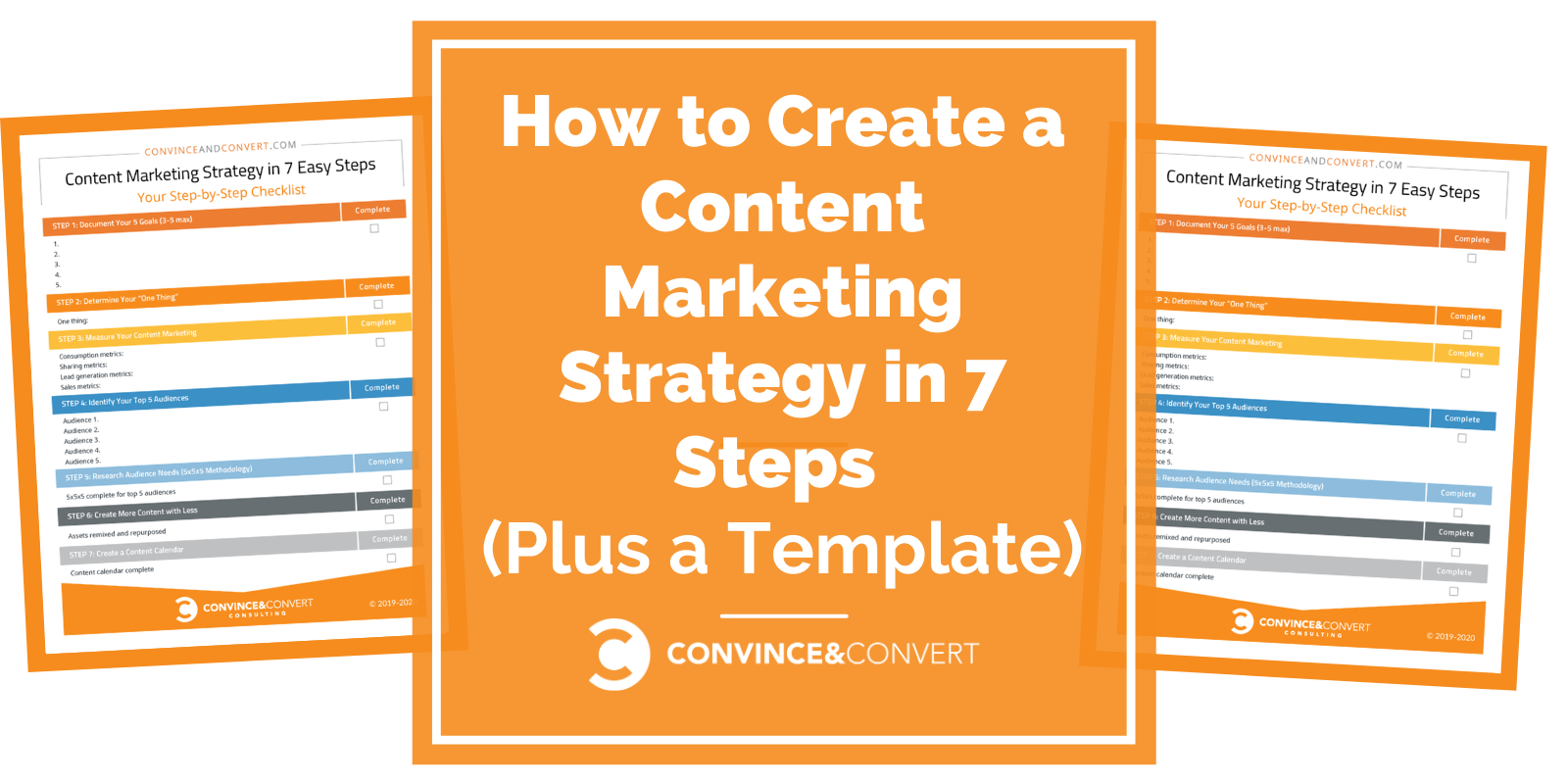
These 7 core steps provide the quintessential framework for long-term success. We’ve outlined them here so you can take your own content marketing strategy and plan to the next level, too. Oh, and we also include a free content marketing strategy template to help guide you along the way.
Of course, if there’s anything else we can do to help you or your organization, please let us know.
Why Content Marketing Strategy Is Important
Before we jump straight into the steps, we want to emphasize that a content marketing strategy isn’t a “nice to have”—it’s a fundamental requirement for success.
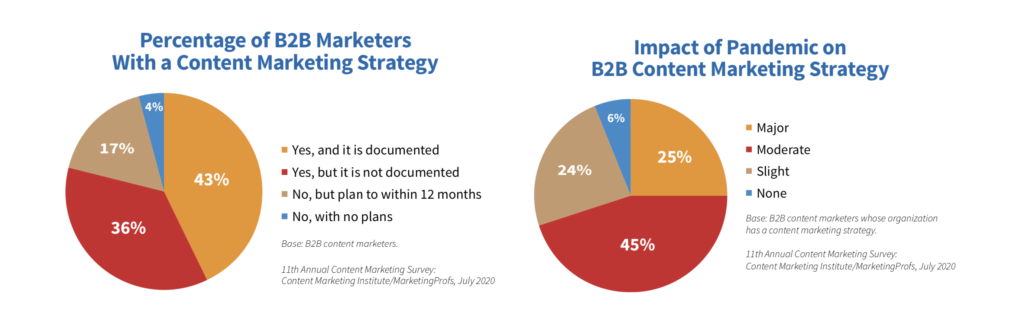
In fact, Content Marketing Institute confirms this fact year after year with their Annual Benchmarks, Budgets and Trends Report. In 2021, 57% of content marketers still say they do not have a documented content strategy, yet those who do have a content marketing strategy consistently rate their efforts as far more successful than those who don’t.
57% of content marketers still say they do not have a documented content strategy via @CMInstitute Share on XIn addition, the pandemic has made updating content marketing strategies even more critical. 70% of content marketers with a strategy report that the pandemic has impacted their content marketing strategy in a moderate to major way.
These facts and figures also echo what we see every day at Convince & Convert, where we create content marketing strategies for some of the best-known brands in the world. And that’s exactly why we’ve put together this guide that outlines our methodology for creating a content marketing strategy. In addition, we have a handy content marketing strategy template help keep you on track and in alignment. You can download the PDF template here.
 Content Marketing Strategy in 7 Steps
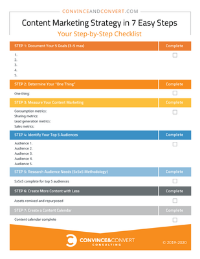
To help you get started on leveling up your content efforts, here’s an overview of each of the seven steps to creating your content marketing strategy:
1. Document Your Goals
It can be so easy to get caught up in the what, how and where of content marketing that we often skip over the single most important foundational piece: the why.
So why are you doing content marketing? Is it to create leads? Build relationships? Improve your customers’ experiences?
No matter what your content marketing goals are, just make sure they’re sustainable for the long-term and they actually connect to your organization’s overarching goals, mission and vision. To keep your strategy focused and crystal-clear, stick to three to five business goals max, and document them.
Remember: Creating content for content’s sake is never your goal.
Creating content for content’s sake is never your goal. Share on X2. Determine Your “One Thing”
There is an enormous glut of content, and more and more is being published every day. So what will you create in your content marketing program to set your organization apart? In other words, what is the heart and soul of your content program? Is it to:
- Be disproportionately useful?
- Create Youtility?
- Motivate and inspire?
- Educate and entertain?
The only appropriate response to all of the above is YES! Otherwise, you run the risk of providing more of the same and contributing to that enormous, growing content glut.
Going one step further, Jenny Magic, one of the superstar analysts at Convince & Convert, has a fantastic tip for gut-checking your “one thing.” First, she recommends writing down all of the brand messages your company uses. Then, take your top three competitors and cross off any messages on your list that they’re using, too. What you’ll have left is a completely unique set of brand messages, which can help clarify your “one thing.”
Remember: Give yourself permission to make your story bigger.
 3. Measure Your Content Marketing
 3. Measure Your Content Marketing
If you want to track content, do something trackable and figure out how you’re going to prove the content works before you make the content. Warning: beware of using vanity metrics that don’t really say much of anything at all.
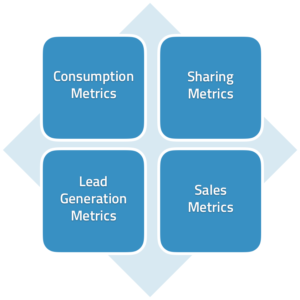
Instead, to understand if your content is really doing what it’s intended to, we need to look to action, not just eyeballs. That’s where the 4 categories of content marketing metrics come in:
- Consumption metrics: This is one of the best and easiest places to start. Basically, what did audiences do with the content? Think actions: views, downloads, listens, visits, etc.
- Sharing metrics: How resonant is this piece of content, and how often is it shared with others?
- Lead generation metrics: The ultimate goal for most organizations; How many leads came from a piece of content?
- Sales metrics: Did we make any money on this piece of content?
Remember: The plural of “anecdote” is not “data.”
4. Identify Your Top 5 Audiences
Relevancy magically creates time and attention. In order to be relevant, we have to understand who we’re talking to and targeting, and there are several versions of what that looks like:
- Audience: High-level collections of similarly motivated individuals with some common interest or agenda. Think: repeat product purchasers.
- Segment: Cross-sections of an audience or list in which individuals (or companies) share one or more common traits or can be grouped by a common trait. Think: Work-from-home parents.
- Persona: A data-informed, detailed yet fictitious characterization of the goals and behavior of a hypothesized group of users. Think: In-Charge Charles or Happy-Go-Lucky Hank.
Whichever audience definition you use or look to to guide your content marketing efforts, make sure you’re focusing on your top 5 audiences only, and look at their psychographics, not just demographics. Also, consider replacing stock photos with icons or symbols to avoid getting stuck on what your audience physically looks like or stereotyping by age, race, or gender.
Remember: You are not your audience. Focus on their needs and motivations, not yours.
5. Research Audience Needs
No matter which approach you use to classify and identify your customers from step 4, get to know them with the 5x5x5 methodology.
The 5x5x5 takes your top 5 audiences, looks at their top 5 questions at each of the 5 key stages of the marketing funnel to better understand their wants, needs, and expectations, so you can create content that fulfills it all.
If you’re doing the math, you’ll notice that this method produces 125 questions to create content for. But don’t worry, once you distill the 125 questions down to unique questions and remove duplicates or near-matches, you’ll usually only have about 50-60 unique questions. And you most likely already have content that answers some of their questions, so start looking for the obvious content gaps first.
Once you have this list, you’ll know your audience much better, plus where your content stands with helping them.
Remember: Your content should answer their questions, not just fulfill your business goals.
6. Create More Content with Less
When it comes to content problems, almost everyone thinks the solution is to create more. But, as we’ve covered in Step 2, there is a glut of content, and we don’t want to add our content on top of the already massive heap. Plus, you probably have plenty of content created at this point, which means it’s time to remix and refresh our content before we even think about creating another new piece:
- Repurpose or reuse content: Give content new life, by giving it a quick remix. That could include updating some still-relevant content with new information, turning an infographic into an animated video, or republishing content so it’s front and center for users to see.
- Curate content: Why reinvent the wheel when there’s plenty of great content out there already? Curate content from trusted sources, but be sure to give credit where credit’s due and include your own perspective on the content piece, too.
- User-generated content (UGC): Tap into your customers or your social community for additional content ideas and pieces.
- Atomization: Take one huge piece of content and break it down into eight smaller pieces of content. This one is a tried-and-true Convince & Convert favorite.
Only after you’ve identified gaps in content or have remixed, refreshed and atomized content should you move on to new content creation.
Remember: Content isn’t free. Maximize what you have, and then create new, if needed.
7. Create a Content Calendar
We have an entire content calendar blog post, plus a free content calendar template, that walks you through exactly how, what and why to calendar content, but here’s the gist:
- Start with your binge-worthy shows: Add binge-worthy shows (aka ongoing content efforts that are executed at least 2x per month) into your calendar first and make sure to pay attention to any key dates or big events.
- Add your one-time specials: Pay attention to how your quarterly content commitments, or one-time specials, overlap or complement your binge-worthy shows.
- Round it out with regularly scheduled programming: Last, but definitely not least, add in your regularly scheduled programming. These should help fill any gaps in your cadence and keep content consistent.
- Add content to the content repository: Don’t have a place right now in the calendar for some great ideas? Add it to the repository. Let this be your storage solution for great ideas and check back on it often.
Remember: A content calendar is one part of, but never a substitute for, a content marketing strategy.
Click Here to Download Your Content Marketing Strategy Template
This post was originally published in 2014 by Jay Baer and updated extensively by Anna Hrach and Jenny Magic in 2021.